Showing posts with label Anchor Brewing. Show all posts

Monday, September 19, 2016

Rambling Reviews 8.19.2016: Dry Hopped Steam from Anchor, 10 Barrel's Cucumber Crush, and JC Flyer IPA from Iron Springs

Once again it's time to ramble about three notable beers I've tried over the past couple weeks.

We'll start out with Anchor's great twist on their iconic flagship. I'm talking about Anchor Dry Hopped Steam Beer. There's a little more to Dry Hopped Steam than just the dry hopping as Anchor Brewmaster Scott Ungermann also lightened the traditional Anchor Steam recipe for the dry hopped version. “We took our most popular, classic beer and gave it a contemporary twist by introducing a lighter body and an elevated, dynamic hop profile using new and classic hop varieties," states Ungermann in a press release. The dry hopped version is lighter and brighter than traditional Anchor Steam, with the floral hop aromas you'd expect from a dry hopped brew. It's still got the classic complex roasty and slightly woody character, it's just dialed down a bit to let the floral hops through. What's interesting is drinking the dry hopped version and the traditional one side by side to contrast the deeper, richer flavors of Achor's traditional Steam with the new, more contemporary version These days, a lot of the older craft breweries like Anchor struggle a bit to remain relevant in the fast moving brewing industry. Dry Hopped Steam shows Anchor has effortlessly overcome this challenge.

Next beer up is Cucumber Crush Sour from 10 Barrel Brewing. 10 Barrel takes a lot of flack from selling to corporate beer giant AB InBev , which reminds me of the time I was at an small coffee shop across the street from a Starbucks. On the coffee shop wall, there were all sorts of signs saying things like "Corporate coffee was evil", "Starbuck Sucks", and various other derision thrown at the Starbucks across the street. There was just one small problem: Their coffee was noticeably inferior to Starbucks. Say what you want about the evil diabolical plans of AB InBev, and while I likely agree with you, 10 Barrel is demonstrably one of America's better breweries, still going strong since the acquisition. Cucumber Crush is yet another example. There's light flavors of cucumber with a fruity, strawberry-like clean tartness. That's it.  Yet, this simple, straightforward uncluttered combination is just ridiculously refreshing.

Finally, we come to JC Flyer IPA from Iron Springs Brewing in Marin County's Fairfax. With family in Marin County, I drop by the Iron Springs Brewpub every so often and have enjoyed this West Coast style IPA. It's citrusy, with tangerine flavors dominating, with some piney notes and a little resiny stickiness. The malt basically stays out of the way. Just another in the long line of solid-to-great IPA's you find all over the place in California.


Monday, April 4, 2016

Anchor's New Brewmaster Scott Ungermann Talks about Brewing, Go West! IPA and other new Anchor Beers

The classic copper brew kettles at Anchor
Anchor Brewmaster Scott Ungermann has a tough act to follow. His predecessor, Mark Carpenter is a legend in American brewing, having been at Anchor's since the early 70's. Carpenter had been the longtime Assistant Brewmaster until Fritz Maytag sold the brewery in 2010.  Then, Carpenter was promoted to Brewmaster. While Carpenter was at Anchor, he was highly instrumental establishing beer styles like the American IPA, the American Barleywines, and the Winter Seasonal. And of course, there was always Anchor Steam.

The iconic brewery promoted Scott Ungermann to Brewmaster at the start of this year, with Carpenter becoming Brewmaster Emeritus. Ungermann arrived at Anchor in mid 2014, from of all places A-B InBev, and started as Anchor's Production Director. Ungermann's first major release is GoWest!, Anchor's version of the West Coast IPA. Anchor graciously provided an opportunity to interview Ungermann about his life in brewing, the development of Go West! and what else is in store at Anchor, which was conducted via e-mail.


Tell us a little about yourself.  How did you get into brewing?

I grew up in the Bay Area and always had a deep respect for Anchor Brewing. I first toured the brewery as a senior at Cal in 1987 and fell in love with the brewery and the beers – especially Anchor Steam. I was an English major at Cal, and just saw brewing as a hobby. My buddy Darryl and I bought our first home brew kit at The Oak Barrel in Berkeley in 1988, not long after we toured the brewery.  After graduation when I was teaching high school in Southern California, my Mom sent me an article on the Brewing program at UC Davis with a note that said “this might be interesting . . . “  My wife had recently graduated from UC Davis, and we quickly decided to move back up North to pursue this dream. I studied Brewing science and got an MS in Food Science from UC Davis in 1995. Shortly after graduating, we moved to New Jersey for her job and I took a job with Anheuser-Busch at the Newark Brewery as a Brewing Supervisor. This led to an 18 year career that took us from New Jersey to Columbus, Ohio and then St. Louis, ultimately leading to a position as Brewmaster at the Fairfield brewery back in Northern California. When I heard about an opening to come to Anchor in 2014, I jumped at the opportunity to come here and make great beers in the brewery that inspired me in the first place.

I see from your LinkedIn profile you've worked for a long time at different Anheuser-Busch facilities before coming to Anchor in 2014.  How has that transition been like?  What do you hope to accomplish at Anchor?

The transition has been amazing. This is a wonderful brewery to work at with a great group of people. I get to be a lot more involved in every aspect of innovation and new beer development. Although very challenging, it has also been a lot of fun.  Being appointed Brewmaster this year, I knew I had big shoes to fill. Having Mark Carpenter stay on board as Brewmaster Emeritus is definitely helping the transition and he will continue to be a valued resource. With Anchor,  I’m looking forward to bringing new and different beers to the growing portfolio and pushing the brewing boundaries a bit with new methods. We most recently did that by utilizing a completely new dry hopping technique that I helped design, used to create Go West! IPA. We will, of course, still continue to honor our traditional brewing methods by using our all copper Brewhouse, open fermentation vessels, and the hands-on attention that we give to each brew.
Scott Ungermann during his days at A-B InBev in
promotional photo during that period

OK, let's talk about Go West!  Why did Anchor decide to release this beer?

We knew that beer drinkers were craving a more hop-forward beer from Anchor, and we wanted to create something was a nod to our California roots.  IPAs were enjoyed as early as 1849 during the California Gold Rush. Anchor has a long history in the Golden State, and Go West! IPA is another way we honor that heritage. The end result is a complex brew with aromas of citrus, pine and the tropics with a crisp bitterness and clean finish.


Can you go through the process of developing the recipe and nailing down the brewing process.

Developing any new beer is a high-wire act. We try to balance the desired outcome with the practicalities of brewing in our very unique brewery.  The first thing to do is taste many other existing beers as well as all of our available ingredients.  In designing Go West! IPA we knew that we wanted a golden color, not too malt forward, a pleasant hop bitterness and a bold hoppy aroma with fresh notes of pine and citrus as well as some tropical fruit aroma. We brewed many single hop brews on our pilot system to evaluate different hop varieties, we varied our mashing schemes, and we tasted everything – as a panel. This can’t be done alone. It took months of brewing and re-brewing and tasting and re-tasting. The hops that we selected from these trials were Calypso, Citra, Equinox and Eureka. We also decided that we needed to try a different method of dry-hopping rather than the bags of hop cones that we have been using for years in Liberty Ale and our other dry-hopped beers. We worked with Mueller to design a tank that we could flow-through to get the freshest possible dry-hop aroma. We call this tank the Odeprot. We then began large scale brewing trials that we released down at our beer garden at The Yard. This gave us the practical experience of releasing our new IPA in a place where we could get direct feedback from our beer drinkers. Eventually we arrived at a final recipe and began brewing this new beer!

Were there any particular IPA's that inspired you for Go West!?  Any particular favorite IPA's from other breweries you're willing to share?

We tasted many IPAs as panel. We did this tasting blind so as not to skew any data based on bias. This is always tricky. We worked very hard to arrive at an original recipe without attempting to replicate any other beers – we wanted something that was fresh and new, but also that was true to Anchor roots. There are many excellent IPAs being made by many other breweries throughout California and across the country. It wouldn't be fair to single out one or two above the rest, but we have a deep respect for the many other Northern California breweries that are making excellent beers of all styles.

Any new beers in the works you can talk about?

We currently have an interesting series of beers called the Pacific Siren Series we are releasing. These are lighter sessionable beers flavored with natural fruits. Meyer Lemon Lager is a crisp refreshing Lager brewed with Meyer Lemon juice, lemon peels and lightly dry-hopped with a hop variety called Lemondrop.  This is a zesty, citrusy beer with a nice dry finish that is very drinkable and balanced. The second beer in this series is Mango Wheat.  It is a light refreshing wheat beer with a beautiful Mango aroma that comes from aging the beer on Mangos.  We are also releasing a new beer that is a collaboration with the SF Giants called Orange Splash Lager.  This is a very exciting beer for us as we are all huge Giants fans and have a great partnership with them.  The beer is a refreshing Orange Lager that is brewed with orange peels, Mandarin orange juice and a specialty malt that brings a nice orange hue to the beer. This beer has a zesty Orange aroma, but finishes crisp and is a very nice drinkable Lager for the ballpark. Last – we are continuing to release special “one-off” beers at the Anchor Beer Garden at the Yard that include full-size brews that will be available all season as well as some special Firkins that are available on a very limited basis.  The first Yard Series beer of this year is called Opening Day IPA and will be released prior to the beginning of the season. It is a sessionable IPA at 4.98% ABV and 45 IBUs, brewed with 100% pale 2-row for a bright, golden color.  We hopped it generously with Nelson Sauvin in the brewkettle and then dry-hopped with Cascade, El Dorado and the Haas experimental hop 431 in the Odeprot at nearly 2 lbs per barrel.  The result is a nice crisp IPA that is bursting with lush tropical and citrus hop aromas.  And of course there’s always the next big thing . . .


It still amazes me today that Anchor beers from the 70's like Liberty Ale, Old Foghorn Barleywine, Christmas Ale and Anchor Steam still remain highly relevant forty years later, coming from a totally different era of American brewing. Yet, despite this history, the brewery never seems tired or out of date. We look forward to Anchor's next big things.

Anchor Brewmaster Emeritus Mark Carpenter


Monday, March 14, 2016

Rambling Reviews 3.14.2016: Anchor Brewing's Go West!, Off Color Brewing's Le Wolf, and Almanac Farmer's Reserve Blueberry

Running a marathon, plus lots of work and family commitments have slowed down my beery explorations lately. However, I've still had time to sample some new brews to ramble about them in my little corner in the online world. So let's get to it!

We'll start with Anchor's new IPA foray, Go West!. Anchor has an interesting history with IPA's. Anchor arguably launched the whole IPA thing in America with their Liberty Ale.  Even though it was released in the 1970's, Liberty Ale still holds up today as a strong example of the style. A not so strong example of the IPA in my seldom humble opinion is Anchor's unnamed IPA, which I find rather timid  and underwhelming. There's no such problem here, Go West! hits all the classic West Coast IPA notes, full of punchy grapefruit and pine flavors, and a slightly resinous finish. Presumably, the marketing folks at Anchor hope an exclamation point does a lot more for this beer than it did for Jeb Bush.

Next up, Le Wolf Biere de Garde from Chicago's Off Color Brewing. I found this toasty, yeasty, estery concoction just a real pleasure to sip. It's a little on the sweet side, and at 7.3% abv, offers a real kick. Fruity esters dominate. I picked up some apricot and peach, but it was more one unique flavor not easily broken down into components.  A few folks on Beer Advocate noticed pear. It's one of those beers you can analyze for hours, or one you can enjoy without thinking about it at all.

Last, but hardly least is Almanac Farmer's Reserve Blueberry. Ho hum, Almanac put out another excellent barrel-aged brew. Almanac first brews their house sour ale, and then racks it to a secondary fermentation in wine barrels filled with Northern California blueberries. There it sits for a few months, picking up the blueberry flavors and a nice purply color. Sipping the result, the blueberries served as a light accent to the wine, oak and moderately strong sourness. It's balanced, all the flavors playing nicely together rather than popping out on their own. What else can I say, it's another example of the usual Almanac magic.


Monday, December 7, 2015

Rambling Reviews 12.7.2015 : Anchor Barrel Ale, Shock Top Twisted Pretzel Wheat, and New Belgium/Ben and Jerry's Salted Caramel Brownie Ale

It's that time again! More ramblings about some new and unique beers I've imbibed lately for your reading pleasure.

First up, Anchor Brewing's Barrel Ale, a new release that's part of Anchor's Argonaut Series. In a press release, Anchor Brewmaster Mark Carpenter described how they made it. "We took four well-loved Anchor beers and aged them separately in our used Old Potrero® Whiskey barrels. The beers don¹t undergo fermentation, though, so the aging process focuses on picking up flavors and aromas from the barrels. Next we blended the aged beers in a cellar tank with charred barrel staves for a secondary fermentation, allowing the beer to naturally carbonate, pick up characteristics from the staves, and let the flavors marry."  

What's impressive here is that it's very balanced despite all the strong flavors of charred oak, whiskey, some vanilla, dark caramel and toffee. Nothing dominates, the flavors melding effortlessly to create one nice harmonious brew. It's one of those beers where new flavors reveal themselves as you slowly sip through it. I also totally appreciate a dark, complex sipping beer that isn't an alcohol bomb at 7.5% abv. Just a delight to drink.

And then there was Shock Top Twisted Pretzel Wheat. Shock Top is a Anheuser-Busch brand that's fascinated me for some time. Shock Top offered me a sample of this special release, and I jumped at the chance. It's drinkable...but I didn't find it particular convincing as a pretzel inspired beer. It's not bad, but Twisted Pretzel Wheat suffers from a disconnect between its created expectations and what it actually delivers. It pours a reddish brown, without bready or toasty flavors one would expect from the color.  There's an artificial butter flavor that threatens to overwhelm the brew. And where's the salt? I found the lack of any discernible salt took away from the pretzel experience. I can see how Shock Top fans would find this to be a delightful twist on the Shock Top line. For me, it was an interesting experiment, unoffensive enough to drink, but the flavors really never came together to create something very enjoyable, never really succeeding in what it set out to do.


Another beer attempting replicate something else is the collaboration brew between New Belgium and Ben and Jerry's, Salted Caramel Brownie Brown Ale. True the progressive politics of the collaborators, proceeds from the sales of this beer go to Protect our Winters, a group devoted to fighting climate change. It's got something in common with Shock Top Twisted Pretzel Wheat in that I wasn't getting any salt here either, although I suppose they put some in there. There's some nice caramel and dark chocolate flavors, but thankfully those flavors don't feel heavy and there's very little sweetness. It's a humble brown ale jazzed up a little to be caramel brownie-like, creating a decadent drinkability. Well done.


Friday, December 4, 2015

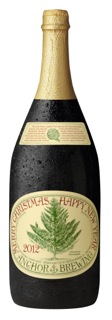
The Session #106: Anchor Brewing's Mark Carpenter Talks about the Transformation of the Anchor Christmas Beer

This month's Session on Holiday Beers got me thinking about the early holiday beers in the United States. While plenty of pre-prohibition holiday ales existed in the United States, the first modern holiday beer is widely credited to Anchor Brewing's Christmas Ale, released in 1975. This beer was based heavily on Anchor's Liberty Ale, a hop-monster by 1970's standards that bears little resemblance to Anchor's Christmas Ale today. Arguably the next significant holiday beer release was Sierra Nevada's Celebration, an IPA Sierra Nevada still brews to this day.

Given the first two major modern holiday beer releases in the United State were IPA's, why aren't most American holiday beers hop-forward IPAs?  Why are dark, roasty, malt-dominated spiced ales largely dominate America's holiday beer landscape? And how did the iconic Anchor Christmas Ale transform from a ground breaking hop monster to the rich, roasty, spiced ale that in many ways has defined the modern version of this tradition?

Seeking answers to these questions, I recently spoke with Anchor Brewmaster Mark Carpenter, who's been brewing at Anchor at 1973 about the transformation of Anchor's Christmas Ale from a minor variation of the hoppy Libery Ale to it's current form today.

Recalling Anchor's initial Christmas beer in 1975, Mark explained, "Fritz (Maytag) though it would be fun to brew a Christmas beer. We're thinking, we're a tiny brewery, so we'll brew 400-500 cases, mostly for gifts. We were just trying something and see how it would work out."

Anchor Brewing's Mark Carpenter 
Then in 1983, things changed.  "We finally had enough ale brewing capacity to brew Liberty Ale all year around," explained Carpenter. (Anchor's flagship Steam Beer is cold fermented.) So with Liberty Ale added to the line-up, Anchor decided to brew something different for the holidays. "We asked ourselves what our Christmas beer would be," explained Carpenter. "We had all traveled to England to research breweries, so a few of us wanted to brew a brown ale since we really liked the brown ales we had there. So we brewed a brown ale for the Christmas Ale, and modified it each year for three years."

Then came that fateful Christmas of 1987 when Anchor's Christmas Ale transformed into what we recognize it today.  "That year, we decided to do a Wassail, a traditionally spiced beer for the holidays. Traditionally, the spices are added to the beer either at people's homes or in the pubs, but we added to the beer as it was brewed. I thought we'd do that for maybe a year or two."

Of course, that's not what happened.  "Once you start putting spices in beer, it opens up a whole new world and we never went back. We could do all kinds of things. Everyone had all kinds of ideas and it really gave us a lot of opportunities to do a lot of spiced ales." As it does to this day, Anchor changes up the spice mix and recipe for each year's Christmas Ale.

I asked Mark if he was surprised that many craft breweries holiday beers resemble the dark roasted spiced ales that Anchor's Christmas Ale became rather than the IPA's of Anchor's Liberty Ale and Sierra Nevada's Celebration which initially started the trend.  Laughing, he answered "It doesn't surprise me, and I don't mean to sound arrogant, but so many breweries just copied what we were doing."

Whether you believe Carpenter that Anchor's Christmas Ale of 1987 was widely copied, it's worth noting that two other influential Holiday Beers, Deschutes's Jubelale and Full Sail's Wassail, were first released within a couple years of the ground breaking 1987 Anchor version, and both are dark roasted spiced ales similar to Anchor's. So it seems fair to say that the transformation of Anchor's Christmas Beer through the 1980's still strongly reverberates today in craft breweries releases all over the United States.

Mark Carpenter wanted to include one final comment.  "Fritz always insisted having "Merry Christmas and Happy New Year" on the labels. It shortens the selling time and our distributors wanted us to change it for that reason, but I think it's a great tradition.  The new owners of Anchor insist on this as well."


Wednesday, July 15, 2015

Rambling Reviews: 7.15.2015: Fruit Beers from Anchor, Lagunitas and Altamont Beer Works

More rambling reviews for the second time this week. This time, the theme is beers with fruit in them.

First up, Anchor Brewing Zymaster Series No. 8. Luxardo Cherry Ale.  Anchor took a base amber ale and aged in a bed of Luxardo Marischino Cherries, which accorrding to Anchor, aren't those bright, artificially colored fruit-like things that top sundaes but are instead some sort of heirloom cherry. Whatever these cherries are in real life, they make this beer really work. The toasty and smokey flavors from the base amber blend really well with the cherries, all the flavors well balanced. I'm not usually one to get into beer and food pairings but I could see this beer really working well with certain desserts, or the cherry flavors playing off various meats. One of those beers to carefully sip to fully appreciate.
A far less successful example of using a fruit additions is Lagunitas Citrusinensis Pale Ale. Lagunitas took their Dog Town Pale Ale, tweaked the recipe to add more wheat into the grain bill, then added blood orange juice into the mix. The blood orange addition is too heavy handed, dominating the brew rather than creating an interesting twist. The tangy blood orange flavors battles the bitter hoppiness of the underlying Pale Ale and things aren't pretty. Flavors clash and muddle, and when the dust clears, there's this chalky flavor. And what are these weird precipitates collecting at the bottom of the pint glass? An interesting beer, but not in a good way. Big misfire.


Finally, I really dug Berry White, a cream ale with raspberry and cranberry additions from Altamont Beer Works which was pouring on Nitro at San Jose's Original Gravity. Great name, it's almost as smooth and luscious as a Barry White ballad. The raspberry and cranberry work well together creating a nicely rounded berry flavor with a pleasant tartness. Nice off-beat summer beer I found to be a guilty pleasure. Can't get enough of your love, baby!

Tuesday, June 30, 2015

Rambling Reviews 6.30.2015: Summer Beers from Anchor, Gordon Biersch and Santa Clara Valley

Summer is now officially upon us, so time to ramble about some of the lighter brews especially great for this time of year.  Good summer beers are underrated, possessing enough complexity and depth to draw you in if you care to, which can be easily ignored if all you want to do is cool off.

First up, Anchor Brewing Summer Wheat.  In the past, I was never a fan of this beer. That's changed now that Anchor's tweaked the recipe. The earlier version was a little bland for my taste, a pretty one-note wheat beer with nothing particularly to recommend about it. Anchor's now jazzed it up with some subtle hop additions, including dry-hopping it with Simcoe. The result is a crisp, dry beer with some tartness from the wheat and citrus, lemony character from the additional hops giving the beer some extra depth. Now I'm a fan.


Next up is Gordon Biersch Sommerbrau, a Kolsch.  Their are plenty of Kolch's out there, some rather light and ordinary.  As Gordon Biersch brewmaster says in a press release, "Kolsch is such a unique style and is so challenging to brew." No place to hide any off flavors in a Kolsch.  The surprisingly sturdy underlying malt with some wheat tanginess finishes a little earthy.  Lot's of subtle things going on here, and I like the little extra malt omph you don't always see in this style.

Finally, when Santa Clara Valley Brewing's tap room opened, I high-tailed it down there the first chance I got and tried, among other things, their Little Orchard Saison.  Lot's of spice gives it some zip with some yeasty undertones for balance.  Not a deep review, but I liked it so much, I was just enjoying it rather than scribbling down a bunch of tasting notes, OK?


Wednesday, June 10, 2015

A Tour of the Anchor Brewery from Brewmaster Mark Carpenter

Getting a tour from Anchor Brewmaster Mark Carpenter is not unlike getting a tour of a modern automobile factory from Henry Ford.  So much has changed in American brewing since Fritz Maytag hired Mark Carpenter in 1971, and yet the beers are every bit as relevant today as they were then.  With no prior brewing experience, Carpenter went on to help develop and brew beers like Anchor Liberty Ale, Anchor's Our Christmas Ale, Old Foghorn Barleywine and of course, the iconic Anchor Steam. I find it amazing how forty years later how these influential beers changed a brewing industry, yet still hold up to the very best of what today's multitude of highly skilled brewers have to offer.

I spent a recent evening on an tour with a number of bloggers, tweeters Instagrammers, and other social media types evidently invited help to create more awareness for Anchor.  While some hovered around the hors d'oeurves, angling for a dramatic photograph of a plate of mushroom sushi or stared intently into their phones, Mark Carpenter grabbed most everyone's precious and limited attention just talking about the early days at Anchor.  Back then, Anchor used food coloring as part of the legacy recipe Maytag inherited with the brewery.  If some customers thought it wasn't dark enough, they'd just pour more food coloring in. To learn actual traditional brewing techniques, Mark Carpenter took trips with Fritz Maytag to Europe to visit breweries. Today, Carpenter proudly told the audience Europeans regularly pass through the Anchor Brewery to visit one of the sources of America's brewing revolution.

Carpenter had no shortage of entertaining answers to questions with his refreshing "I'm too old to give a damn what people think" attitude. When did he realize craft beer had a future?  "Not at first, our beer was only sold in counter-culture bars," recalled Carpenter. "Then, I went to this fancy place called Henry Denton's in the 80's that was blowing through kegs of Anchor Steam.  That's when I realized this beer had a wider audience." What does he think about taking test batches of beer to beer festivals to try new recipes?  "People are tasting your beer right in front of you so they always say nice things.  You don't learn much."  How about getting ideas from distributors?  "All distributors care about is what's hot.  They just want you to brew something to follow the current hot trend." What about all the new breweries coming online?  "We had to distribute widely just to find a market. Today, breweries don't have to do that, they can find a large enough market locally." I just stood there trying to absorb it all, although I did take a moment to lobby Mark about reviving the discontinued Anchor Bock.

I remember my first Anchor Steam twenty-five years ago. I was trying to get back with old girlfriend who introduced me to it at some yuppie fern bar in St. Louis. It struck me at first sip, with its drinkable complexity unlike all the bland light lagers I gulped through college. Things didn't work out with her, but I began a life-long affair with Anchor Steam. All I can say after meeting the man behind the beer is "Mark, thanks for all the great beer, and the memories that went with it."


Tuesday, March 26, 2013

Beer of the Month: Anchor Brewing California Lager

We celebrate all things California with our Beer of the Month, Anchor Brewing's California Lager, a beer that is quite literally California history in a glass.  The recipe dates back to 1876 from little known Boca Brewery located near Truckee, CA, which used a mountain ice pond to ensure the lager kept cold during the fermentation process.   It's brewed with 2-row barley and Cluster hops, a hops varietal you won't find in many beers these days, but it was highly prevalent in during the 19th century. 

Perhaps the reason you don't see Cluster hops much anymore is that this hop variety has a certain distinctive taste, which Randy Mosher describes in his book "Radical Brewing" as having "a certain sharpness often called cattiness".    I have to admit, "cattiness" doesn't sound so good, but I found the Cluster hops to provide a distinctive earthy, grassy, slight herbal finish unlike anything I've tasted in other beers.   The Cluster hops meld well with the lightly toasted, slightly sweet biscuit-like malt to create a clean, refreshing, and off-beat lager that grew on me after each bottle.

Anchor's California Lager was originally brewed as the first beer of their Zymaster Series in early 2012, and due to its popularity, has been added to Anchor's permanent line-up early this year.  Anchor Brewing is donating a portion of the profits of California Lager to create the Anchor California Lager Grant, to be awarded by the California State Parks Foundation as a part of their Discretionary Grants program to benefit state parks.

Sure, selling beer is a business.   Kudos to Anchor Brewing for preserving California's history and landscape as part of that business.

Monday, December 10, 2012

Video on Artist Jim Stitt's History with Anchor Brewing

In the wake of Anchor Brewing's 2012 Christmas Ale, they've put together an interesting video telling the story of label artist Jim Stitt. Jim has had a hand in nearly every Anchor label since the 1970's and hand draws a new tree each year for the Anchor Christmas Ale Label. Jim Stitt, Fritz Maytag, and author/historian Dave Burkhart collectively tell the story of a huge part of Anchor's history in this  video I enjoyed watching that you can find here:

http://www.youtube.com/watch?v=0YaS2Odm2vg

Tuesday, October 2, 2012

Touring Four Innovative California Breweries

(An edited version of this post was published in the Oct/Nov 2012 issue of Adventure Sports Journal.)


This isn't a museum.  It's Anchor's Historic Brewhouse
(Photon courtesy of Anchor Brewing)
There’s revolution going on in this country, born largely in California that has nothing to do with music, politics, or some insanely great gadget.  It’s a revolution in beer, a beverage that’s existed for over 5,000 years of human history that continues to be reinvented to this day.    Large breweries run by multinational corporations producing unoriginal light, flat tasting yellow lagers are dramatically losing market share to a growing fleet of smaller independent breweries concocting a wide variety of rich, flavorful, and unique brews.   People are enjoying the endless flavor combinations and possibilities of beer and becoming more aware about where their beer comes from.  California breweries are major pioneers of this movement.

Unlike most businesses with tightly protected company secrets, many breweries happily throw open their doors to let you experience their sights, sounds, and tastes.    You can tour four of California’s leading breweries changing the way our nation experiences beer, and here’s what you’ll find.

Go to Anchor Brewing and you’ll see a piece of San Francisco history.   The brewery is housed in a four story Depression-era brick building in San Francisco’s Potrero Hill neighborhood.  Visitors meet in brewery’s tap room, with its classic carved wooden interior and old brewery photographs, which include Janis Joplin happily enjoying an Anchor Steam.    The brewery itself, with its old copper kettles and brick interior, looks like something out of a museum, but is where all of Anchor’s beer is brewed today.


The tour starts with recounting of the tumultuous history of Anchor Brewing.  It’s one of the oldest breweries in the United States, dating back to the Gold Rush-era in San Francisco.  It survived the 1906 Earthquake and Prohibition, but nearly went out bankrupt in 1965 before Fritz Maytag, a recent Stanford graduate from a Midwestern family of prominent dairy farmers (think “Maytag Blue Cheese”)  learned of the imminent demise of his favorite beer and purchased 51% of the business.

While saving the brewery, Maytag carefully studied brewing methods from the brewery’s earliest period, when San Francisco breweries were known for their “Steam Beer” fermented in open vats often on roof tops with the cool San Francisco climate providing natural refrigeration.  It’s a brewing practice that had long been abandoned, most likely due to the likelihood of wild yeasts and other airborne microbes ruining a batch. 
Maytag developed a system of open shallow vats in a more controlled environment to replicate brewing technique, and today every drop of Anchor Steam slowly ferments in these vats.   A highlight of the tour is catching a glimpse of these vats, which had long been a brewery secret.     As brewery spokes person Candice Uyloan describes, “These fermenters are an important part of our unique brewing history and represent a marked difference from the vertical tanks found in other breweries. Except for the occasional hot day, we still simply use the naturally cool air from San Francisco's foggy coastal climate.”

After viewing the brewing equipment and bottling line, the tour concludes back in the brewery tap room where visitor can taste between 6-8 Anchor Beers, depending on the season.   Uyloan adds “We would like visitors to leave knowing that every Anchor beer comes from the hands of people who love and are dedicated to what they do.”

Tour Information
The brewery offers two tours a day on Weekdays.  Tour reservations are taken up to six months in advance and dates fill up quickly, often weeks in advance.  Call 415-863-8350 for more information and to make reservations.  Admission is free.


Tiny, rustic Booneville, with its 1,000 residents, looks like a typical small town, but is like no place on earth.  It’s home to an eclectic group of artists and some of the finest Pinot Noir growing land in all of California.   It’s also the source of Boontling, a quirky, folk language of the region that sprang up in the late 1800’s.  Boontling is largely defunct, save for a few dedicated local practitioners keeping the language alive.  This includes Anderson Valley Brewing, located on the Southern edge of town, which names their beers after Boontling phrases and place names. 
Don't let all those controls in the Anderson Valley Brewhouse fool you,
none of them actually work.

 Anderson Valley’s current brewery went online in 2000 after outgrowing its previous location in central Booneville.  The open 30-acre brewery grounds also include a Frisbee golf course, a tap room, a field of hops growing up a series of a vertical support lines, and eight goats used to “mow” part of the grounds.

The Anderson Valley Brewery tour meets in the tap room and proceeds into the Brew House, where the first thing you’ll see are three gleaming copper brew kettles recovered from a defunct German brewery.  There’s an equally impressive looking old world control panel that looks like something Captain Nemo used to pilot the Nautilus, but if you look carefully, a smaller, more modern electronic controller is actually used to control the brewing equipment.

“We like to educate people on the brewing process,” explains Rebecah Toohey, Anderson Valley’s Tap Room Manager.  “During the tour, we go over the history of the brewery, as well of each step we take to brew our beer.”   This includes a trip to the hop freezer.   There’s nothing more stimulating the walking into the cold air of the hop freezer and deeply inhaling all the fresh, piny hops Anderson Valley uses for beers such as their Hop Ottin’ IPA and Poleeko Pale Ale.  Visitors also get to go up on the brewery roof and see the solar panels which generate about 40% of the breweries electricity, while learning about the many other environmental initiatives that are part of Anderson Valley’s commitment to its unique region.

 Tour Information
Tours start Daily at 1:30 and 3:00 pm, except between January and March, when they only run Thursday-Monday.    The tour costs $5, and include two beer samples from the tap room, and a $5 coupon for any purchase over $10 in the brewery gift shop.  Call (707) 895-BEER for more information.


Lagunitas is first and foremost about having a good time.  And everyone working at Lagunitas seems to be having one, as all the staff at the Lagunitas Tap Room and Beer Sanctuary has an genuine, infectious  enthusiasm for the place.  The Tap Room and Beer Sanctuary serves food and often features live music.  Tours guides announce the start of each tour by clanging a bell and waving a small, crudely written card board sign above their head.  Anyone who wants to join simply follows them out into the brewery.
Ryan Tamborski discussing Lagunitas's Barrel-aged Brews
Brewery tours typically have the aura of a high school science field trip, but as tour guide Ryan Tamborski tells the story of Lagunitas founder Tony Magee, he works the room like a stand-up comic.  “In the early days, there was a problem when Tony Magee flushed yeast into the community septic tank.  Does anyone know what you get when you flush yeast into septic tank?  Coors Light!”  Indeed, there’s plenty of entertaining stories behind many Lagunitas beers, and most involve either marijuana or owner Tony Magee thumbing his nose at various authorities.   The tour guides are master story tellers, and the Lagunitas Brewery tour is the most entertaining hour I’ve ever spent at a brewery.
But behind the goofy humor, one also witnesses a relentless capitalism. Lagunitas is one of the fastest growing breweries in the United States, available all over the country, and commanding high prices on the black market overseas.   Ryan happily showed off the shiny state-of-the-art equipment Lagunitas recently invested in to meet this exploding demand, and well as telling us Lagunitas’s plans to open a second brewery in Chicago at the end of this year.    Sure, Lagunitas is a place to have a good time, but touring the place also reveals how much hard work and commitment must go into creating the good times.

Tour Information
Mondays-Tuesdays 3:00 pm, Wednesday at 3:00 and 5:00 pm, Saturdays 1:00, 3:00 and 5:00 pm 

Call 707-778-8776 for more information


Sierra Nevada is where to go to learn a lot about beer. 

“We have a very technical tour, “explains Marie Gray, Tour Coordinator for Sierra Nevada.  “We get a lot of questions from beer craft drinkers who really want to know more about beer, so we do our best to answer them.  It’s a lot of fun, and we meet a lot of great people out there.”
The dignified splendor of Sierra Nevada's Brewhouse

The tour takes over an hour and carefully goes over every step of the brewing process.  It starts in the mill room, which prepares the malted barley for brewing.  Next in the Brew House,  large room with impressive copper brewing kettles, visitors can peer into to see the mash through glass windows.  You can actually sample a taste of wort, the liquid full of extracted sugars from malted barley, used in Sierra Nevada Pale Ale to understand how the hops and fermentation transforms the sweet liquid into beer.  There is also an invigorating trip to the Sierra Nevada hop freezer room as well as overhead views of the bottling and canning lines.

 In addition to brewing, visitors learn plenty about Sierra Nevada’s legion of environmental practices.  Climbing up to a catwalk above the brewery, you’ll look down on no fewer than 10,763 solar panels adorning the roof.    Guests also discover that hydrogen fuel cells provide approximately 50% of the brewery’s electricity needs and that Sierra Nevada actually paid to extend a railroad line a few miles to so that rail cars could roll right up to the brewery, eliminating the CO2 emissions from trucks transporting supplies those last few miles.

At the end, there’s a tasting of eight samples of different Sierra Nevada beers at the brewery tap room, and even this is used as an opportunity to educate.  “We try to make it an educational tasting, where people learn to enjoy the different aromas and flavors of beer,” explains Marie.  “In the end, our guests walk away with a really good experience.”  

For those more interested in Sierra Nevada’s environmentally sustainable practices, the brewery hosts Sustainable Tours on Fridays, Saturday, and Sunday the focus on Sierra Nevada’s environmental initiatives.  There is also beer tasting at the end of this tour, but is held in an outside garden, weather permitting, and consists of four samples.

Tour Information
Tour Hours:
Monday – Thursday: 11:00am 12:00 pm, 1:00 pm, 2:00 pm 3:00pm & 4:00 pm
Friday and Saturday: 11:00am 12:00 pm, 12:30pm, 1:00 pm, 2:00 pm, 2:30pm 3:00 pm, 4:00 pm, 4:30pm & 5:00 pm
Sunday: 11:00am 12:00 pm, 12:30pm, 1:00 pm, 2:00 pm, 2:30pm 3:00 pm, 4:00 pm
Phone:  530-899-4776


Friday, May 6, 2011

The Session #51: Stumbling Through the Session Beer and Cheese Pair-Off

For this month's Session, Jay Brooks of Brookston Beer Bulletin fame has asked us to find our best beer pairings for three different cheeses in the great Session beer and cheese pair-off.

Asking my opinion about beer and cheese pairings is like asking a blind man about sculpture. I just don't have the senses and faculties to describe the complete artistic experience, only bits and pieces of it. Beer has never really interested me for its culinary value. Instead, it's the history, economics, geography, and sociology surrounding beer drives me to write about it, not to mention I like to drink it. But of course, plenty of people write authoritatively on stuff like history or economics despite barely understanding those subjects, so I probably shouldn't hesitate to write about beer and cheese pairings, even while hardly knowing what the hell I'm doing. And this Session seems to embody the egalitarian nature of beer, where everyone can contribute and there's none of the negative elitism that seems to surround other beverages, most notably wine. (Which I also like to drink.)

So here goes. And I've enlisted my wife Linda to help with these pairings who often provides helpful advice when my thoughts go astray. In fact, she often advises me on all sorts of subjects, whether or not I've actually asked her for help. So what I did was pick two similar beers to pair with each cheese. I read a little about what the "experts" had to say about what beers pair well with the cheeses Jay selected for the Session. Then I picked a couple beers in the recommended style, and then Linda and I spent three evenings trying each cheese with their respective beer pairings, picking the winning beer in a head to head comparison. Here's the results.

Maytag Blue: Anchor Brewing Old Foghorn vs. Lagunitas Gnarleywine

The general wisdom seemed to be that blue cheese pairs well with barleywines. So it seemed obvious to pair Maytag Blue Cheese with Anchor Brewing's Old Foghorn. After all, if there was no Maytag family, there would be no Fritz Maytag, and if there was no Fritz Maytag, Anchor Brewing would likely be out of business decades ago. And it fairly safe to say if there was no Fritz Maytag to rescue Anchor Brewing, there probably wouldn't be Lagunitas Brewing either.

I couldn't taste much of a difference between the two pairings until Linda noticed the Gnarleywine being sweeter, contrasted better with the tang of the blue cheese. Then I began to notice that the more intense tasting Lagunitas barleywine held up better to intense flavors of the Maytag Blue than the Old Foghorn, where both the beer and the cheese just tasted flatter by comparison. So I had to admit my wife had a good point. I just hope that doesn't go to her head.

The verdict: Lagunitas Gnarleywine

Three Year Old Aged Wisconsin Cheddar: Dogfish Head 90 Minute IPA vs. Bear Republic Racer 5

I went to at least five high end grocery stores looking for Widmer One Year Aged Wisconsin Chedder and came up empty, so finally settled for something from my neighborhood grocery store cheese section labelled "Three Year Old Aged Wisconsin Cheddar". Choosing two beers to pair with an aged Wisconsin cheddar was even a bigger challenge. It only seemed logical to pair a Wisconsin cheese with beer from Wisconsin, but it is not easy to find Wisconsin beers in the San Francisco Bay Area. Since the Green Bay Packers won this year's Super Bowl, I contemplated some sort of football pairing, but really couldn't come up with anything that made sense. Then I figured since Wisconsin is in the center of the United States, it would only be logical to test how cheese from the center of the country would pair from beer on the East and West Coasts. And least logical to me.

Since a few great beer culinary minds suggested IPA's go well with cheddar cheese, I picked an IPA from each coast. While the IPA is a hoppy beer style, East Coast IPA's tend to be more balanced, with the malt contributing to the flavor and the beer having a more rounded bitterness, while IPA's brewed on the West Coast tend to be unbalanced, with less malt and more hops with intense floral and citrus flavors. And thus over time, IPA's from the East Coast and West Coast gained reputations for their distinctive styles. It's a lot like East Coast and West Coast rap music, except no brewers have gotten shot over it.

Speaking of rap, Dogfish Head owner Sam Calagione is known to grab the mike and bust a few rhymes. And yes, his awkward raps on beer, which take unfunkiness to stratospheric levels are amusing when taken in extremely small doses. Thankfully, he's a lot better at brewing, and Dogfish Head's 90 Minute IPA is one our favorites, a great example of the East Coast style with rich, slightly sweet maltiness balancing plenty of smooth bitterness. Challenging from the West Coast is Bear Republic's Racer 5 IPA, brewed with whisper of malt that's no match for all its piney, grapefruity hoppy goodness. So who wins?

We both found the sweetness of the Dogfish Head IPA contrasted well with the tang of the cheddar cheese, and while the cheese also blended well with the beer's rich, smooth character. One the other hand, the intense hop character of the Racer 5 clashed against the cheddar's tanginess, the resulting conbination not working particularly well. The East Coast and bad rap prevails!

The Verdict: Dogfish Head 90 Minute IPA

Cypress Grove Humbolt Fog Goat Cheese: Anderson Valley Brewing Brother David's Tripel vs. 21st Amendment Monk's Blood

I suppose Humbolt County should be known for its towering redwoods, breath taking coastal vistas, and vibrant artisan community. But mostly, it's known as a place that grows some pretty good dope. So it seemed natural to pair cheese from this region with a beer from a place also known for good dope, Mendocino County, and a beer from where a lot of dope is consumed, San Francisco. And since fruity Belgian Ales are often recommended beers to pair with goat cheese, Brother David's Tripel from Anderson Valley Brewing and 21st Amendment's Monk's Blood figured to be good choices.

At first, I found the Brother David's Tripel to be the better pairing, as its aromatic crispness really seemed to intensify with the goat cheese. But while Linda preferred the Brother David's Triple over the Monk's Blood straight up as a beer, so found the Tripel overwhelming the cheese, while the fruitier Monk's Blood matched the cheese's intensity, and created the classic fruit and cheese combination. She declared the Monk's Blood to be the better pairing. And you know, after further consideration, my wife was right. Admitting that in writing can be dangerous.

The Verdict: 21st Amendment's Monk's Blood

Even though I barely knew what I was doing, this was a lot of fun. I might even stick around for Session 51.5.

Wednesday, October 6, 2010

Beer of the Month: Anchor Brewing's Humming Ale

For the month of October, I bestow the honor of Beer of the Month of October to Anchor Brewing's Humming Ale, their recently released fall seasonal brew. While Anchor Brewing has long been a craft brewing pioneer since Fritz Maytag rescued the brewery in the 60's, they seemed a bit behind the craft beer curve, with a tried and true beer line-up, but nothing particularly new or original. That's changed in 2010, with an excellent collaborative Imperial Stout with Sierra Nevada, and now Humming Ale, the first seasonal Anchor's released since 2005.

And what a great, easy-drinking yet sophisticated brew this is. It's rather fruity, with apricot and a little pineapple flavors, and then has this herbal, almost savory, slightly astringent hop finish. I found it well balanced, with a great composition of flavors that just seems to hit all the right notes.

Everyone seems to be holding their breath, wondering how the new ownership of Anchor will handle the national craft brewing treasure Fritz Maytag sold them. Seems like everything is working out all right so far.