Monday, December 21, 2015

Happy Holidays!

It's that time of year again. Time to spend time with the family rather than staring intently at the computer screen, furiously typing away. So I'll be checking out of this blog for a couple weeks before starting up again at the beginning of the year.

But before I go, allow me a brief reflection on the Rambling year that was. I'm glad to say I think my writing took a noticeable step forward while I posted less often than before. Intentionally striving for quality over quantity, I think it paid off with a greater depth of posts in 2015. It's always interesting talking to brewers and others that make the beer industry the vibrant hub of activity it is today, and thankfully I got to talk to plenty of those people and tell their stories here.  And hopefully, I bored you less with posts on my running than usual.

For 2016, I'm just shooting to do that again and then some. So thanks stopping by and reading and I look forward to rambling on again next year.

Wishing you all the best for the Holidays and New Year!

Monday, December 14, 2015

Reviews of two beer and food books: "Craft Beer Bites" by Jacquelyn Dodd and "Beer, Food and Flavor" by Schuyler Schultz

And now friends, it's time to share my thoughts on a couple of beer and food books by two leading innovators of putting beer and food together, Jacquelyn Dodd and Schuyler Shultz.

"The Craft Beer Bites Cookbook" by Jacquelyn Dodd is a follow-up to her highly successful first effort "The Craft Beer Cook Book", which I  highly recommended a couple years ago. Here, the emphasis is on using beer as an ingredient to enhance the flavor of appetizers, dips and other small bites. In her accessible and conversational writing style, Dodd lays out a wide range of recipes which all include beer. While they seemed easy enough to follow, there was a bit of a devil in the details.

For example, the "Belgian Ale-Marinated Grill Steak Crostini with IPA Chimichurri" recipe calls for marinating flank steak in a mixture of Worcestershire sauce and Belgian ale. Hmmmm.....what Belgian ale to use?  I mean, what constitutes a "Belgian ale" is awfully wide open. In the "Choosing the Right Brew!" sidebar accompanying the dish, Dodd recommends using "a sweet Belgian ale" so the malt caramelizes on the grill.  That really doesn't narrow down the expansive Belgian ale category much, but I ended up using Allegash Dubbel and lucky me, the marinade imparted an excellent flavor to the steak. The lively IPA Chimichurri sauce worked fantastically with the flavorful marinated meat, the results being spectacular.

A few days later, I made the "Parsley White Bean Beer Cheese Dip" for some friends who invited our family over to watch a football game. Could I make the dip the night before and serve it for the game the next day without the flavors going bad?  Unfortunately, there's no mention about how long the recipes keep for, good information many other cook books include. The recipe called for one can of Great Northern White Beans.  Should I drain the beans, or dump the whole can in? The recipe didn't say what to do here either. I decided to drain half the liquid from the beans and the resulting dip was a little watery.  Adding some extra Parmesan and cream cheese fixed that. (Note to self, drain the beans next time.) The resulting bean dip was excellent, the IPA adding a nice bitter counter point to the fresh parsley and bean flavors.

I could probably pick a few more nits with the recipes, but that would be missing the point. I've made several of Dodd's recipes from both of her books, and the worst ones turned out pretty good.  Many were simply excellent. Next time youre invited to a party, bring something made from Craft Beer Bites and chances are pretty high you'll be a hero for the evening.

Then there is "Beer, Food and Flavor" by San Diego chef Shuyler Schultz. As you might expect from the title, much of the book is devoted to beer and food pairings. I must confess to find most beer and food pairing discussions either hopelessly clinical or so technical only a hard core foodie can understand it, both approaches taking all the fun out of the whole deal. As far as I'm concerned, all beer pairs with pizza, and a good beer with any meal makes it better.  When early in the book, Schultz declares, "The nature of beer is adaptable enough so that you're likely to come across only a few truly disastrous pairings. Most often a pairing of random food A and random food B will yield an adequate, enjoyable experience," I realized Schultz was my kind of guy.

Schultz does his best to make his treatment of beer and food pairing accessible and fun. Most of the time he pulls it off.  Examples from various beer tasting menus he's prepared are used to good effect. Schultz has travelled all over the country meeting brewers and tasting beers and it shows on the pages. You feel the presence of a true culinary expert happily sharing his vast experience in an unintimidating fashion.  Still, he sometimes can't help using sentences like,"Deeper analysis reveals notes of yuzu, pine needles, and eucalyptus leaf" as he does in describing Pliny the Elder.

Is this book a beer and food pairing guide, an introduction to craft beer to the culinary inclined, or a guide for restaurateurs to develop their own beer paring menus? It's all of this and more with the dense, somewhat unfocused nature of the book coming across as a great big data dump.  But it's a data dump from the mind of someone who's spent his career thinking deeply on how beer affects our perceptions of food and has worked with some of the greatest brewers in the country.  More importantly, there's a genuine love for craft beer and all that it stands for which creates a lightness that overcomes the heavily worded pages. The road Shultz takes us on in an interesting trip worth exploring.


Monday, December 7, 2015

Rambling Reviews 12.7.2015 : Anchor Barrel Ale, Shock Top Twisted Pretzel Wheat, and New Belgium/Ben and Jerry's Salted Caramel Brownie Ale

It's that time again! More ramblings about some new and unique beers I've imbibed lately for your reading pleasure.

First up, Anchor Brewing's Barrel Ale, a new release that's part of Anchor's Argonaut Series. In a press release, Anchor Brewmaster Mark Carpenter described how they made it. "We took four well-loved Anchor beers and aged them separately in our used Old Potrero® Whiskey barrels. The beers don¹t undergo fermentation, though, so the aging process focuses on picking up flavors and aromas from the barrels. Next we blended the aged beers in a cellar tank with charred barrel staves for a secondary fermentation, allowing the beer to naturally carbonate, pick up characteristics from the staves, and let the flavors marry."  

What's impressive here is that it's very balanced despite all the strong flavors of charred oak, whiskey, some vanilla, dark caramel and toffee. Nothing dominates, the flavors melding effortlessly to create one nice harmonious brew. It's one of those beers where new flavors reveal themselves as you slowly sip through it. I also totally appreciate a dark, complex sipping beer that isn't an alcohol bomb at 7.5% abv. Just a delight to drink.

And then there was Shock Top Twisted Pretzel Wheat. Shock Top is a Anheuser-Busch brand that's fascinated me for some time. Shock Top offered me a sample of this special release, and I jumped at the chance. It's drinkable...but I didn't find it particular convincing as a pretzel inspired beer. It's not bad, but Twisted Pretzel Wheat suffers from a disconnect between its created expectations and what it actually delivers. It pours a reddish brown, without bready or toasty flavors one would expect from the color.  There's an artificial butter flavor that threatens to overwhelm the brew. And where's the salt? I found the lack of any discernible salt took away from the pretzel experience. I can see how Shock Top fans would find this to be a delightful twist on the Shock Top line. For me, it was an interesting experiment, unoffensive enough to drink, but the flavors really never came together to create something very enjoyable, never really succeeding in what it set out to do.


Another beer attempting replicate something else is the collaboration brew between New Belgium and Ben and Jerry's, Salted Caramel Brownie Brown Ale. True the progressive politics of the collaborators, proceeds from the sales of this beer go to Protect our Winters, a group devoted to fighting climate change. It's got something in common with Shock Top Twisted Pretzel Wheat in that I wasn't getting any salt here either, although I suppose they put some in there. There's some nice caramel and dark chocolate flavors, but thankfully those flavors don't feel heavy and there's very little sweetness. It's a humble brown ale jazzed up a little to be caramel brownie-like, creating a decadent drinkability. Well done.


Friday, December 4, 2015

The Session #106: Anchor Brewing's Mark Carpenter Talks about the Transformation of the Anchor Christmas Beer

This month's Session on Holiday Beers got me thinking about the early holiday beers in the United States. While plenty of pre-prohibition holiday ales existed in the United States, the first modern holiday beer is widely credited to Anchor Brewing's Christmas Ale, released in 1975. This beer was based heavily on Anchor's Liberty Ale, a hop-monster by 1970's standards that bears little resemblance to Anchor's Christmas Ale today. Arguably the next significant holiday beer release was Sierra Nevada's Celebration, an IPA Sierra Nevada still brews to this day.

Given the first two major modern holiday beer releases in the United State were IPA's, why aren't most American holiday beers hop-forward IPAs?  Why are dark, roasty, malt-dominated spiced ales largely dominate America's holiday beer landscape? And how did the iconic Anchor Christmas Ale transform from a ground breaking hop monster to the rich, roasty, spiced ale that in many ways has defined the modern version of this tradition?

Seeking answers to these questions, I recently spoke with Anchor Brewmaster Mark Carpenter, who's been brewing at Anchor at 1973 about the transformation of Anchor's Christmas Ale from a minor variation of the hoppy Libery Ale to it's current form today.

Recalling Anchor's initial Christmas beer in 1975, Mark explained, "Fritz (Maytag) though it would be fun to brew a Christmas beer. We're thinking, we're a tiny brewery, so we'll brew 400-500 cases, mostly for gifts. We were just trying something and see how it would work out."

Anchor Brewing's Mark Carpenter 
Then in 1983, things changed.  "We finally had enough ale brewing capacity to brew Liberty Ale all year around," explained Carpenter. (Anchor's flagship Steam Beer is cold fermented.) So with Liberty Ale added to the line-up, Anchor decided to brew something different for the holidays. "We asked ourselves what our Christmas beer would be," explained Carpenter. "We had all traveled to England to research breweries, so a few of us wanted to brew a brown ale since we really liked the brown ales we had there. So we brewed a brown ale for the Christmas Ale, and modified it each year for three years."

Then came that fateful Christmas of 1987 when Anchor's Christmas Ale transformed into what we recognize it today.  "That year, we decided to do a Wassail, a traditionally spiced beer for the holidays. Traditionally, the spices are added to the beer either at people's homes or in the pubs, but we added to the beer as it was brewed. I thought we'd do that for maybe a year or two."

Of course, that's not what happened.  "Once you start putting spices in beer, it opens up a whole new world and we never went back. We could do all kinds of things. Everyone had all kinds of ideas and it really gave us a lot of opportunities to do a lot of spiced ales." As it does to this day, Anchor changes up the spice mix and recipe for each year's Christmas Ale.

I asked Mark if he was surprised that many craft breweries holiday beers resemble the dark roasted spiced ales that Anchor's Christmas Ale became rather than the IPA's of Anchor's Liberty Ale and Sierra Nevada's Celebration which initially started the trend.  Laughing, he answered "It doesn't surprise me, and I don't mean to sound arrogant, but so many breweries just copied what we were doing."

Whether you believe Carpenter that Anchor's Christmas Ale of 1987 was widely copied, it's worth noting that two other influential Holiday Beers, Deschutes's Jubelale and Full Sail's Wassail, were first released within a couple years of the ground breaking 1987 Anchor version, and both are dark roasted spiced ales similar to Anchor's. So it seems fair to say that the transformation of Anchor's Christmas Beer through the 1980's still strongly reverberates today in craft breweries releases all over the United States.

Mark Carpenter wanted to include one final comment.  "Fritz always insisted having "Merry Christmas and Happy New Year" on the labels. It shortens the selling time and our distributors wanted us to change it for that reason, but I think it's a great tradition.  The new owners of Anchor insist on this as well."


Tuesday, December 1, 2015

Finally checking out Fieldwork Brewing

Having enjoyed the two brews from Berkeley's Fieldwork Brewing I could get my hands on in the South Bay over the past year, I decided it was high time to check out the place one Sunday afternoon with no particular place to go. Fieldwork is one of those neighborhood hang-outs you wish was in your own neighborhood. The place has no TV's so conservation fills the air. Despite being pretty crowded, it was surprisingly easy to find a seat to do some reading and work through a taster flight.

Wow. What more to say about the Fieldwork beer I sampled? They're innovative, but in a effortlessly innovative "why wasn't everyone doing this before" kind of way, rather than a forced, contrived effort where you can practically hear the brewer screaming in the background "LOOK HOW FREAKIN' INNOVATIVE I AM!" The "Citraweisse" was a study of Asian style balance, the light ale's sour yin balancing a nuanced Citra-hopped bitter yang. The "Sour Diesel" was mighty sour with a citrus and dank hop undertones, if one cared to notice this subtle action playing out under the sour dominance.  I tried an IPA called Sea Farmer made with sea salt and grapefruit. Reading the description, I figured I'd either love it or hate it. The briny grapefruit melding with the underlying hop flavors created an absolutely wonderful, flavorful tropical brew. I also thoroughly enjoyed my sample of Coconut Milk Double IPA, the coconut flavors just poking through the fruity hoppy flavors to create another excellent tropical-esque brew.

Sorry, no highly detailed tasting notes, as if you were expecting some detailed culinary breakdown from your truly, who recently described a coffee milk stout as "tastes like coffee and milk poured into a stout."  I was just whiling away the afternoon, reading a few pages out of my book and losing myself in a few excellent brews. I'll say this about Fieldwork, all six beers I sampled displayed a tremendous command of the ingredients and the brewing process. Take six random beers from some of the greatest breweries I highly respect and there's liable to be some slight off-note somewhere, or some place where the flavors just don't quite come together. It happens, even to the best of them. Not a thing seemed out of place with anything I tried at Fieldwork.

I'll add that Fieldwork strives for flavor in their IPA's instead of the usual alpha-acid assault so many brewers resort to. While I'm all for a hoppy punch in the mouth now and then, all the Fieldwork IPA's I tried showed an impressive flavor range achieved with hops that would impress the most jaded hop-geek, while being totally accessible to those who normally reach for something like BlueMoon. The brews really are that uniquely universal.

I'll be back.

(Some obligatory brewery photos follow.)


Monday, November 30, 2015

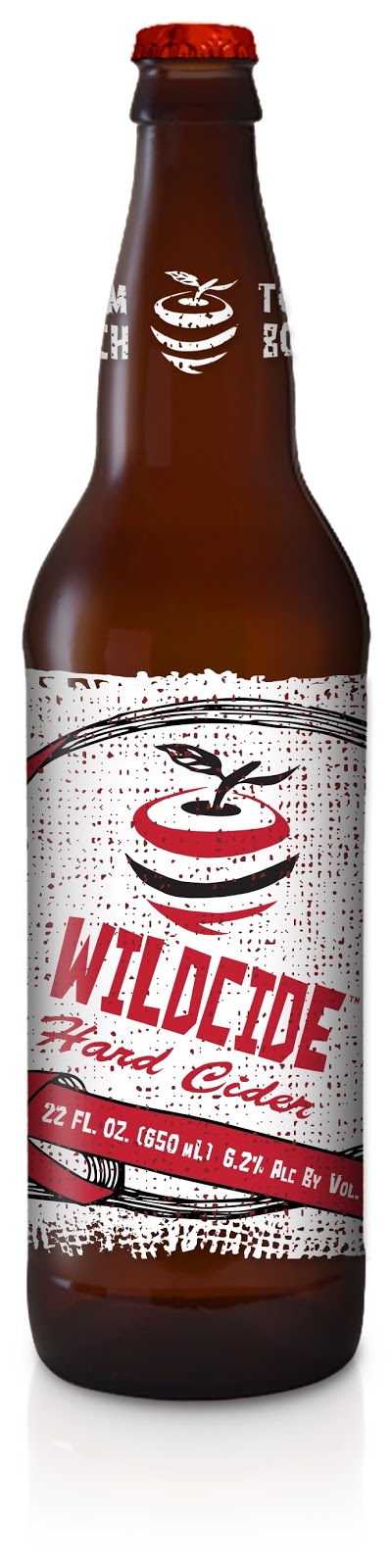
Dan Gordon talks about his new cider venture WILDCIDE


Craft beer is hot. Lately, cider has been even hotter. The Beer Institute reported US cider production more than tripled between 2011 and 2013, from 9.4 to 32 million gallons. In 2014, Nielsen reported off-premise cider sales grew by 71% in 2014. While cider sales among the nation's largest brands have slowed in 2015, cider has firmly established itself in our nation's beverage landscape with many new cideries both large and small getting into the action.

So perhaps it's no surprise the Gordon Biersch stepped into the cider area with their newly released WILDCIDE. Of course, most people aren't all that interested about a brewery diversifying its beverage portfolio, they just want something good to drink.

On that score, I found WILDCIDE successful. It's quite refreshingly dry, full of crisp apple flavors with a pleasant residual tartness. WILDCIDE takes fresh pressed juice of four different apples: Fuji, Granny Smith, Red Delicious and Golden Delicious.  Fuji and Golden Apples create aroma and sweetness, while Red Delicious apples create body.  Granny Smith apples provide the tart tang at the finish.

So exactly how did WILDCIDE come about and what else can we expect from Gordon Biersch's cider venture? I asked Dan Gordon, Gordon Biersch's Co-founder and Brewmaster about the genesis and his future plans for WILDCIDE in an e-mail. Here's what he had to say.


BR: Why did you decide to start producing cider?

DG: I made the decision when the laws changed a couple years ago allowing me to get a winery license. Also, after reading the back labels of the major producers and seeing there wasn’t a 100% all-natural hard cider I could find made from fresh pressed juice without additives.

BR:Take us through the process to blend the different apples to get the flavor you were looking for. How many test batches did it take?

GD:The most important element was using fresh pressed apple juice. That was the key to capturing the aromatic qualities of the apple. By using fresh pressed juice, we were able to achieve a very aromatic flavor profile and fruitiness while keeping it dry with a crisp body. Many of the large producers are using concentrate and nearly everyone uses sulfates. We don’t use either.  

The blend of apples was designed to have the right amount of fermentable sugars, acidity and aroma.It wasn’t rocket science. The magic comes in how we control the fermentation rate and dialing in the residual sugar to 1.15%. That’s the challenge. Selecting the apple formulation was the easiest part.  

BR: What's the biggest challenge in brewing a consistent high quality cider?  

DG: It is all about controlled fermentation to get it consistent. It is a different approach than beer but equally satisfying.  
BR: Cider doesn't exactly meet the Reinheitsgebot. Is brewing WILDCIDE a departure from your German traditional brewing roots?

DG: To the contrary, I think we’re applying the spirit of the Reinheitsgebot philospohy to cider. We use one ingredient: just fresh pressed apple juice. Making a great cider as pure as possible is exactly what the Reinheitsgebot is to brewing.  

BR: Did brewing something like WILDCIDE involve a lot of soul searching or was it more a "let's go for it" thing?

DG: No soul searching was necessary. We needed to broaden our horizons and it has been a blast. I really am a fan of our hard cider and have it on tap at home.

BR: Do you have plans for other cider versions (pear?) or other projects in the works you can talk about?  

DG: We will be doing some flavored ciders but not really flavors you would expect. The philosophy is to make it delicious and not try to make statement with esoteric flavors.  

BR: Anything further you'd like to add?

DG: I am drinking one as I answer all of these questions.  

Friday, November 20, 2015

21st Amendment helps build a San Leandro neighborhood....the story in Edible East Bay

It's the story of how 21st Amendment's new brewery in San Leandro, CA is revitalizing a tired, industrial neighborhood. I've written a lot of things I've been proud of, but this article ranks of one of the highest because this story is about how beer truly matters.  You can read it on the Edible East Bay website here.