Showing posts with label homebrewing. Show all posts

Thursday, January 3, 2013

The Session #71: Five Things I Learned About Beer From Homebrewing

For this month's Session, John at Home Brew Manual asks us to write about how our experience brewing beer has affected our enjoyment of drinking beer.  I've been homebrewing beer for over three years, making somewhere between 10-15 batches over that time.  Some of the beers were good, some OK, others were beyond horrible.    By my reckoning, this puts me into the "knows enough to be dangerous" category and so I can't realistically claim to have any deep insights into the matter.  But then, what good is having a blog if I can't spout off a bunch of uninformed opinions?  So without further ado, here are five things I learned about beer from actually brewing it.

1.  Any Idiot Can Brew Beer

If a video existed of the first time I ever brewed beer, watching it today would be a lot like watching a video of my first date.  Not only did I not have a clue about what I was doing, everything I was doing was based on books and things I'd seen, but never actually did.   I'd thoroughly sterilize things that really just needed to be cleaned, and barely cleaned things that needed to be thoroughly sterilized.  (Just to be clear, I'm talking about my first homebrew, not my first date.)  I have no idea how any sugars were extracted from the luke-warm, soggy over-sized teabags stuffed with grain that served as the "mash".

After spending nearly a day peeking at the carboy every five minutes, the yeasts quietly worked their magic and the airlock began to slowly pop up and down.  The result was a thin, grainy, severely under-hopped and over carbonated Brown Ale, and all those who tried it gave me a rousing chorus of "It's not that bad." 

Technically it was beer and most people, if not told what they were drinking beforehand, would likely identify my first homebrew as "beer" within a few sips.  Beer became a little less mysterious, and I discovered the most satisfying beer in the world is any beer I just made.

2. Any Idiot Can Brew a Good Beer Once in a While

I'm living proof.  After a few batches of homebrew, I began to develop a process.  Or at least I stopped running around my kitchen yelling "Oh Shit" so much.  Until one day I tried my hand at a Molassas Stout and was in perpetual fire drill mode the whole time.  The grains were mashed at either too high or too low a temperature as I fiddled with the stove burners all afternoon.  The wort was way too hot when I pitched the yeast.  When I was done, it looked like someone with Stout colored-blood had been hacked to death in my kitchen.

To my utter amazement, when I tasted the final product, my immediate thought was "Damn, did I just brew this!".   Some how, all those brewing flaws either counteracted each other, or the off-tastes somehow complimented either other really well, and everyone agreed the final product was truly awesome.   And I'll never be able to duplicate it again.

So whenever someone raves about one great beer from a new brewery that's supposedly the next big thing, I always think, "Let's see them do that again."  Some breweries do, others don't.

3. The Act of Brewing Beer is About as Sexy as Cleaning Your Toilet

When I started homebrewing, an experienced homebrewer advised, "Just realize you'll be spending a lot of time cleaning things."  Unfortunately, he was right.   I spend more time cleaning metal and glass objects require to brew, ferment, and store beer than time actually brew beer.  Over one period, a couple batches homebrew tasted like someone slipped vinegar into it before I figured the source of the contamination.  So whenever a professional brewer says, "Brewing is a lot about sanitation," rather than some way cool awesome recipe, I get it.

4.  Small is Beautiful

Many professional brewers profess a preference to keep their operations small, whether it be to maintain quality or simply to hide the fact their ambitious expansion plans went bust. 

Whatever their reasons, I've found the traditional 5-gallon homebrew batches are too much.  Too much time to brew, too much heavy equipment, and way too much beer.  As much as I love my watery, odd-tasting Pale Ales, after drinking three gallons of the stuff, I'm done with them.  My friends can only accept so much "gift homebrew" before our relationship is seriously strained.

I experimented with smaller 1-gallon all-grain home brew batches with good results, before ramping this up to two gallons, which I brew comfortably in my kitchen with standard cooking equipment.  I'm not too proud to say my biggest source of homebrewing equipment is Bed, Bath, and Beyond.

5. Anyone Who Wants to Brew Beer for a Living Has to Be Crazy

There is nothing more satisfying than drinking my own beer and slowly demystifying the alchemy of yeast, malt and hops with the creation each new batch of beer brewed in my own home.

Thankfully, I don't have to care if each batch tastes a little different.  I don't have to take out any loans to buy equipment, and if a batch of beer goes bad, I can simply pour it down the drain.  I don't have to go around cold calling on bars, grocery stores, and restaurants or worry if my beer isn't selling for whatever reason.  I don't have to hire or fire anyone, or stress out over meeting payroll.   I never have to smile while politely dealing with drunks at Beer Festivals.  Why anyone would want ruin a good thing by doing that other stuff is something that makes absolutely no sense.

Then again, my idea of a great Sunday morning is running ten miles, even in the cold rain, and I suppose some might find that a little weird.

Monday, March 26, 2012

There's lots of good stuff in "The Illustrated Guide to Brewing Beer" by Matthew Schaefer

There are books loaded with lots of good information.  Others have plenty of detailed explanations which are clear and avoid becoming tedious.  And then there are those that have a lot of great looking, yet helpful pictures.  The good news is the "The Illustrated Guide to Brewing Beer" by Matthew Schaefer hits this trifecta.

The first thing I noticed when opening the book is all the great photography.  And yet, the photos don't come across as homebrew porn (not that there's anything wrong with that) but serve a purpose in supporting the text.  Whenever Schaefer describes some homebrewing gadget, there's a picture right there to show you exactly what thing-a-majig he's talking about.  Which is one of the strengths of this book is in its descriptions and explanations of various homebrewing hardware.

Of course, it's hard to use pictures to describe the various molecular chemistry involved in brewing, but Schaefer still takes care to provide clear explanations to good effect.   For example, Schaefer carefully explains why you shouldn't keep a lid over the brew kettle, as this prevents the evaporation of Dimethyl Sulfide (DMS) from the brew, which can result in off flavors.  As a novice homebrewer having brewed about 10 batches of beer over the past 2 1/2 years, I always kept the lid on over the stock pot on the stove to retain heat to help the underpowered electric stove in my apartment get the wort boiling. 
I was intrigued as this seemed to be the first time I've ever heard of this, having three other homebrewing books on my bookshelf.  Consulting these books to see if I had missed something, I found that one book never mentioned DMS evaporation.  The other two mentioned something about this, but only in an off-hand way that didn't make keeping the lid off the brew kettle to prevent off-DMS flavors obvious.  The extra care and detail Schaeffer provides made this concept really stick in my head, and now I'll make sure to keep the lid off.

In addition, Schaefer provides more deeper explanations on critical homebrewing topics such sanitizing, hop additions, secondary fermentation and other topic than other books often touch upon, but do not provide the level of information Schaeffer provides.   In fact, I'm getting psyched to make an IPA after learning some new stuff about adding hops.  Schaeffer, a practicing attorney, provides a helpful appendix on the homebrewing laws for all 50 United States and its an interesting read to see how the laws in each state differs.

The book is written fairly economically, and its 240 pages do not come across as a weighty manual.  But I'm afraid it reads a lot like a chemistry text book.  While  I'm sure Schaeffer is a passionate and enthusiastic homebrewer, this just doesn't come across in his the highly factual and procedural style of writing,  especially when compared to the work of Charles Papazian and Randy Mosher, or the Brooklyn Brewshop Beer Making Book, where a certain excitement for homebrewing leaps off the pages.   I kept waiting for a personal story or unique experience from Schaeffer's homebrewing exploits, and save for a rather routine tale about a carboy blowing its top, never got it. 

Which is why I would hesitate to recommend this book for a first time homebrewer as it would likely come across to as a dense tome that wouldn't generate any excitement needed to overcome any hesitation on taking the home brewing plunge.  It lacks any "first time homebrewing recipe" that I found to be very useful starting point for my first brew, which simplified all the homebrewing techniques I was trying to learn that were overwhelming at first.  And there were only two recipes.  Schaeffer must know a few more he could share with his readers and would be a great way to further to elaborate various homebrewing concepts much the same way he uses pictures to great effect.

These mostly stylistic issues aside, this book will make me a better homebrewer.  Five years from now, I expect my copy to be rather worn and have a bunch of brewing mash and hop stains on it.  Which is always a sign of a good homebrewing book.

(Skyhorse Publishing provide a copy of this book for the purposes of this review.)

Monday, September 5, 2011

Leisurely Labors

I guess there's little point in noting the oxymoron title of Labor Day, since it's a given few people work on it. Or if they do, it's work they've chosen willingly. Like a Labor Day morning 10k run.

If I had to describe how the race felt in a single word, it would be workman-like. (OK, that's two words connected by a hyphen.) World Runners, an organization trying to end world hunger put on the Labor Day race that morning in Sunnyvale Baylands Park was mostly on flat gravel trails, so there were no hills to contend with, but lots of soft crunchy gravel. In those conditions, best just to keep the arms moving, the legs churning, and work right through the course. I kept maintaining a steady pace, and passed a couple people at miles 2 and 3, but by the time I got to mile 4, it was one of those "the guy behind me isn't going to catch me, but the guy in front of me is too far away to get either" deals and so told myself to " just keep working" to get to the finish line. A 39:49 was slower than I expected to run, but then I didn't figure on being second master in the small race, so I guess I'll take that. I've got seven weeks of training to put in before the next race, the Grape Stomp Half-Marathon in Livermore. Not a lot of time, but enough to get some good runs in, get some extra tempo work on the track, and improve upon the Water to Wine Half-Marathon three weeks ago. (Why do I keep doing all these wine themed races?)

Speaking of Labor Day labors, I spent the afternoon brewing a Chile Habenero Stout. Yep, pretty ambitious to brew with chiles, especially since I'm having enough trouble brewing with malt and hops. But to my way of thinking, winging ingredients to come up with a unique, personally designed beer is a lot more fun than trying to perfect a Marzen, or copy beers already commercially available. Especially since the secret to homebrewing is spenign a lot of time cleaning a whole lot of stuff, which quite frankly, isn't a whole lot of fun, so you might as well have fun with flavors.

As for the stout, so far so good. Tasting the wort, the heat level was about where I wanted it, just a little noticeable, but not overpowering. The idea for this beer came from good Mexican chocolate, where there's plenty of flavors going on and little bite of heat at the end. That's what I'm hoping for anyway. Being a lot more confident I killed all the nasty bugs ruining my previous batches and rinsed the cleaning solution off the carboy that muddled the last brew, I'm feeling pretty confident about this one.

Brewing is a lot like running. Put in the well directed hard work and concentration and with a little patience, good things start happening.

Thursday, July 7, 2011

My Latest Home Brew is Barely Drinkable!

There's a saying that anything worth doing is worth doing badly. I can brew pretty badly. Even worse, I malign my own kids while doing so, as my latest versions of Verona's Coffee Porter and Brandon's Brown Ale had all sorts of odd, sour tastes most likely due to some lax sanitation practices. One of the things about home brewing is that you learn that the art of brewing is not so much about romantic ideals of developing great recipes or creative use of ingredients, but mostly about just keeping the damn brewing equipment clean. And if you've ever seen my desk or closet, you know that's going to be a big challenge for me.

So I attempted to clean the bejesus out of everything to make my last brew, a simple Pale Ale, and was just hoping for something drinkable. And the good news, the sour taste the plagued the last couple batches is gone! The bad news is, the brew tasted rather muddled, and most likely some residual cleaning solution and chlorine got into the beer which likely contributed to its muddled, murky taste, which could best be described as malted ice tea. That's a small victory, if you want to even call it a victory, but I'll take it at this point.

All this effort to brew something that I might actually enjoy is creating a new found appreciation for the talents of all the great brewers out there. I began to fully appreciate the amazing accomplishments of world class distance runners after years and years of hard work still left me hopelessly behind runners that world class runners left hopelessly behind. Of course, finishing a race well back in the pack has its own rewards. Drinking crappy beer is pretty horrible.

Running teaches the value of persistence, so I'll just keep at it, and eventually, the hard work will pay off. Drinking your own bad beer is pretty hard work.

Wednesday, February 9, 2011

Genesis of a new beer style: The Sour Porter

Inspired by craft brewers all over the world who are constantly pushing the brewing envelope to create new and innovative beers, my home brewing exploits resulted in the creation of a new beer style, the Sour Porter. While the traditional porter roasted malt flavor profile is apparent if you concentrate real hard, the initial sensation the brewing connoisseur will experience from this beer is an intense sourness in homage to the long Belgian tradition of sour ales. This innovative feat of home brewing was accomplished using traditional porter brewing ingredients fermented using traditional British Ale yeast, combined with a rare, mysterious yeast strain that can only be found lurking around somewhere in my apartment. Upon sampling this beer, there are those who will not share my out of the box thinking, and claim that it tastes like a home brewed porter gone terribly wrong due to some horrible yeast infection, but that will only prove they have highly unsophisticated palates.

Lord, what the hell happened to my last home brew? It was supposed to be a coffee porter made with Starbuck's Verona blend coffee, which I called Verona's Coffee Porter as a tribute to my eight year old daughter of the same name. It tastes like some porter that someone poured a bottle of vinegar into. I suppose screwing up a home brew named after my daughter shows what a fair, even handed parent I am, since I just recently made a rather funny tasting brown ale named after my son Brandon. After further reflection and analysis, I believe I know where the contamination is from and will correct for it, but for now, I'm stuck with a bunch of undrinkable stuff.

They say anything worth doing is worth doing badly. And like running, what you get out of home brewing is what you put into it, and my last couple of brewing efforts have been decidedly half-assed efforts. But the good thing about bad home brew is you can simply turn to beer made from a professional brewer who knows what he is doing, rather than choke down your own swill. And the struggles of home brewing is one way to appreciate the skills and talents of brewers who owe their livelihood to what comes out of their brew kettles.

Sorry Verona, next time I'll get it right.

Saturday, January 29, 2011

Running can't be bottled. This home brew shouldn't be.

One of my biggest mistakes was making a really good home brew. Well, actually my mistake was making a pretty good home brew, and then sharing it with a few other people. Now I have way too high expectations to meet as for the all subsequent brews I make. Even worse, there's no real way I could ever reproduce that home brew ever again since brewing involved about five "oh shit" moments during a rather chaotic afternoon in the kitchen. The beer was from a recipe from Randy Mosher's book Radical Brewing called Black Ship Pirate's Stout, and for Randy Mosher's sake, it's probably good he didn't actually witness me brewing his beer. But somehow, all the flavors came together wonderfully and upon my first taste, I had my first "Damn, did I just brew this?" moment in home brewing. And since a few friends really enjoyed it, there were plenty of requests for my next home brew.

My next home brew I decided to call Brandon's Maple Brown Ale, a tribute to my son and his love for pancakes with maple syrup. And indeed, this home brew involved the requisite five "oh shit" moments and was yet another chaotic day in the kitchen. I used way too little water for the grain mash, creating a brown, jiggly, gelatinous gunk and zero malt extraction. So I poured pot after pot of water at 180 degrees over it to release the malt, sparging the beejeesus out of this mess in order to get something the yeast could feast on. Something weird happened when I poured the maple syrup into the secondary fermenter, the fermentation never really got going, and I had to shake the carboy a week later to jump start the fermentation again. The good news is that I will never be able to reproduce it, since my first reaction upon tasting it was "Damn, did I just brew this crap?". The beer has grown on me a little since, and I now call it an acquired taste, which is what brewers say about their beers when multiple consumption of the beer is required to build up a tolerance to it.

Perhaps in a brutally logically way, this is a fitting tribute to my son Brandon, since he has autism, and something didn't go quite right in his brewing process. But he's suffered enough, and brewing an odd-tasting beer in his name to add insult to his injury was certainly not my intention. I am dutifully distributing bottles of Brandon's Maple Brown Ale to all my friends who asked for it, with a gentle warning of what is in for them if they try it, and that they won't be hurting my feelings if they pour it down the drain. But there will be other home brews which will be better, and one of the best things about home brewing is that you can share your brewing success with others quite directly.


On the other hand, running success can be difficult to share with others, and certainly cannot be bottled. There's no way to distill my best races and runs and give them to others. But since these moments involved gastro-intestinal distress, burning sensations in both the lungs and legs, and I smelled rather awful afterwords, it's doubtful these bottled running moments would be particularly popular or welcome. There's a reason more people like drinking beer than running.

Monday, December 27, 2010

Keeping a running journal again at DailyMile

Back in the day, I religiously kept a running journal. Actually, the information wasn't all that detailed. If I run a track work-out, I would just list the mileage and might note "track work-out" but wouldn't include the length of the track intervals or the times. It's not so much the information one puts into a running journal, but the thought and concentration involved in putting the day's run onto paper that makes a running journal valuable. Well OK, it doesn't take a lot of thought or concentration to write "7" on a piece of paper after running seven miles, but you get the idea. The problem was, every couple of years, I'd lose my notebook, and would have to start the whole process over again.

Sometime in the mid-90's, I ended my daily devotional of running journal entries entirely. A lot of this was simply because I wasn't running much then, and was well on my way to gaining about 50-60 lbs over the next fives years. There was a time I'd blame it all on marrying the wrong woman, who wasn't a big fan of me running, but I think it's fair to say that my first wife probably gave me a well needed break from running seriousness, just not in the right way.

So as to slowly reclaim back the old running life once lived, it's time to start keeping a running journal again. And instead of an old fashioned notebook, I've recently joined DailyMile to record each day of running. It's got a few new fangled features they didn't have back in the day. The most notable is the social networking aspect of the website, where you can have training "friends", and even send your friends motivation, in the form of icons shaped like a blue ribbon or a green thumbs up sign. If you want to send me motivation, well that's nice, but after thirty years with plenty of runs and races under my belt that have gone horribly wrong, countless running injuries of all type and severity, and a few unfortunate incidents involving either end of the digestive system, a green thumbs up icon from out of the blue is not going to make much difference in whether or not I keep at it.

The really neat feature of Daily Mile is their running route mapping feature, leaving no wild guesses as to how far each run is, or how high certain hills are. I've had some fun looking at the online map of my neighborhood, and think, "Hey, what if I ran this course?", then map it out and immediately get a good idea of what I'm getting myself into, rather than finding out the hard way.

For my other hobby, homebrewing, I haven't found the equivalent of Daily Mile, and wouldn't join, even if it existed. Something about quantifying a hobby changes it. By keeping track of miles, times, and workouts, running becomes, at a certain level, a chore, but it's doing those chores that pay off on race day, so I gladly do them. On the other hand, I just simply like brewing beer and sharing those results with friends, end of story. I have great friends who lie to me, always telling me the beer tastes great, whether or not it actually does. And perhaps because the stopwatch is more brutally honest than my friends, I have no real desire to monitor every last beta acid or religiously keep track of the gravity of the beer over the entire process, which would take a lot of fun out of home brewing for me. Maybe some day I'll enter my home brews into competitions and start keeping more detailed notes on my home brews, but right now, developing a repeatable malt extraction process or agonizing over how the judges are going to perceive my homebrews are stresses I'd rather not deal with right now.

So I keep a running journal, and will remain blissfully unaware of metrics needed to improve my homebrews. And unlike my old running journal written in a notebook for my eyes only, my daily workout are now on this blog via some Daily Mile gadget, for the whole world to see. My training is now a wide open book. Is this really progress?

Thursday, August 26, 2010

Trying not to screw up The Bride's Ale, and other related matters

A friend and I are brewing up The Bride's Ale for my upcoming wedding, which was dry hopped and bottled last weekend. In case you didn't know, the word "bridal" comes from "The Bride's Ale", an old English tradition where a special beer was brewed for the bride in celebration of the wedding. Linda, my wife to be, always enjoyed the hoppier beers, so it seemed appropriate the her Brides Ale would be a dry hopped IPA.

We think it's going to be a good one from the samples we took going into the bottles. There's a nice caramel note to the malt, a smooth bitterness, and a nice floral hop bitterness that matches with the brew's aroma. So all we have to do is make sure the bottles are clean, store them in a cool place with little temperature variation, stand back and let the residual yeast do its thing with priming sugar inside the bottles.

If only marriage were that simple. Linda and I have over eighteen year combined marriage experience, so we can no longer claim we had no idea what we were getting into. We've been living together for a couple years now, and she's great for me and my kids.

I'm pretty damn lucky. She's smart, attractive, funny, and does a reasonably good job putting up with all of my crap. But while you can control the brewing process, you can't control what life might throw at you, and yes, this could turn into another train wreck. But hey, part of taking the marriage leap is saying "I love you so much, I want to take this relationship to the next level, even that might result in complete disaster."

Just like brewing and running, all you can do is your best effort to make it turn out for the best. I've survived bad beers, plenty of bad races, and even my last marriage. So I really have nothing to fear, and have pretty good feeling about this one. And at least there should be some good beer at the wedding.

Tuesday, August 17, 2010

Aaarrr! Black Ship Pirate Stout is a Keeper of a Recipe

Talking like a pirate is one of those things that's pretty entertaining for about 20 seconds, and then gets really annoying pretty quickly after that. So I won't attempt to write like a pirate, and spare you the tedium of reading something barely readable. Of course, most pirates were probably illiterate, or wrote in languages barely recognizable today. And they probably didn't go around saying "Aaarrr!", either.

So I'll get to the point and tell you the Black Ship Pirate Stout, from Randy Mosher's great home brewing book, Radical Brewing is an absolute keeper of a recipe. It's my first "Damn, did I brew that?" moment in the six batches I've made since starting home brewing a year ago. Here's the recipe, from page 200 of my copy of Radical Brewing.

Black Ship Pirate Stout
5.5 lbs Amber Dry Malt Extract
1.5 lbs Black Patent Malt
1.5 lbs Dark (Blackstrap) Molasses
1.0 lb Dark Crystal Malt

2.25 ounces Willamette 90 minutes
2.0 ounces Styrian Golding 30 minutes

British Ale Yeast

At end of boil, add 1.0 ounce crushed coriander, 1.0 teaspoon of allspice, and 0.5 teaspoon of ground black pepper. Post fermentation, zest of an orange or tangerine soaked in vodka for 24 hours, and added at bottling.

Some additional comments:

-There's an all grain recipe for this as well in Radical Brewing. I just haven't taken the all grain plunge yet.
-I actually ended up using Fuggles as the 90 minute bittering hop, as a substitute for the Styrian Golding, since that's what they had at my local home brew store. I used Tettnanger hops at 30 minutes, since I picked up the wrong package. Mosher describes Tettnanger as a great aroma hop for wheat beers, so I was a little concerned how this would work out in a completely different brew. I say it worked out all right.
-I used orange zest for this recipe, but would like to try tangerine next time,.

My greatest fear brewing this was that all the different additions, the molasses, four ounces of hops, and the different spices would produce a harshly bitter and cluttered brew. It actually turned out surprisingly smooth and drinkable, with a slight sweetness and spicy zip, the molasses noticeable but hardly overwhelming, and everything blending nicely into all the roasted malt. The orange zest gave it a really nice citrus aroma.

Talking like a pirate gets old really fast, but I could drink this all day.

Friday, July 2, 2010

The Session #41: How Jimmy Carter Unwittingly Created the "Disruptive Technology" That Launched the Craft Brewing Revolution

For this month's Session, Lugwrench Brewing asked us to write about Craft Beers Inspired By Homebrewing. Here's my take on this topic.

Jimmy Carter was elected the 39th President of the United States of America in 1976, and noteworthy accomplishments during his Presidency include negotiating a peace agreement between Egypt and the Israel in the Camp David Accords, installing solar panels in the White House to raise awareness of the energy crisis, and confronting the Soviet Union on its invason of Afghanistan. After his Presidency ended in 1980, he built homes for the homeless all over the world as a key advocate for Habitat for Humanity, and served on many international diplomatic missions, ultimately winning the Nobel Peace Prize in 2002.

But for most craft beer drinkers, his enduring legacy as a public servant was cemented on October 14th, 1978, when he signed H.R. 1337 into Federal Law. This innocuous bill, which mainly dealt with excise taxes on trucks, buses, and retirement plans included a Senate resolution, largely credited to California Senator Alan Cranston, which gave states the right to legalize home brewing. Several states quickly granted their citizens the right to brew beer in low quantities for their personal use, and the craft brewing community generally looks back on the day Jimmy Carter signed this obscure tax bill as the day the craft brewing revolution was born.

It's a story most craft beer aficionados are aware of, but nobody seems to ask why it was this small act of alcohol deregulation launched the craft brewing revolution, and not something else. Why wasn't it the far more sweeping repeal of prohibition? Or the passage of some other minor law? How did allowing a small group of hobbyists to legally brew beer in small quantities evolve into the multi-billion dollar craft brewing industry?

Of course, you cannot legally sell homebrewed beer, but the prevalence of legal homebrewing exposed more people to alternatives to the light lagers dominating the market. And many home brewers were learning in their own way to be commercially brewers. But to my mind, this really doesn't explain how craft brewing went from totally under the brewing industry's radar to a force that has large, multi-national corporations back on their heels as it steadily gains market share.

I believe the reason for this dramatic turn of economic events caused by a bunch of backyard homebrewers is that they created a "disruptive technology", as described by Harvard Business Professor Clayton Christensen, who popularized his theories in 1997 with his book, The Innovator's Dilemma. Christensen noticed that revolutionary business change often came from unexpected directions, from technologies actually considered inferior to incumbent technologies, and which established businesses had very sound reasons to ignore. And yet, these disruptive technologies would later revolutionize industries, with upstart companies embracing disruptive technologies overtaking established incumbents. Christensen largely cited case studies from the computer, communications, or electronics industries, which we normally attribute to technological change, to prove his points. But I believe his theory on disruptive technologies and economic change explain why so many small breweries founded by homebrewers popped up all over the United States.

To explain this, consider what Christensen wrote about disruptive technologies.
"Generally, disruptive technologies underperform established products in mainstream markets. But they have other features that a few fringe (and generally new) customers value."

The first legal home brews in the late 70's were beers most people found strange and unusual, if not outright undrinkable by those accustomed to light lagers. But some found these unique and flavorful beers highly appealing, to the point they would tolerate the uneven, and sometimes poor quality of homebrews from that time, when homebrewers had far fewer resources to guide them as they do today.

"...technologies can progress faster than market demand...means that in their efforts to provide better products than their competition and earn higher price and margins, supplier often "overshoot" their market: they give customers more than the need or ultimately are willing to pay for. And more importantly, it means that disruptive technologies that may underperform today, relative to what users in the market demand, may be fully performance-competitive in that same market tomorrow."

Mainstream brewers in the late 70's and 80's could offer only barely perceptible improvements to their customers. With their light lagers highly engineered to be have attributes like "less filling", "tastes the same every time", "lightly drinkable", and "price competitive", they were somewhat boxed in a corner, with little they could further add to their products.

On the other hand, homebrewers commercializing their beers were learning new and better brewing techniques leading to better beer quality and consistency, as well as new styles and flavor combinations. And each successive significant improvement earned them additional customers, while larger breweries had really nothing new to offer. Over time, home brewers turned businessmen learned to produce a more commercially viable product as they continued to learn how to better deliver what their customers wanted, and more and more consumers learned these smaller breweries had more to offer.

"..the conclusion by established companies that investing aggressively in disruptive technologies is not a rational financial decision to make, has three basis. First, disruptive products are simple and cheaper, they generally promise large margins, not greater profits. Second, disruptive technologies typically are first commercialized in emerging or insignificant markets. And third, leading firms' most profitable customer don't want, and indeed initially can't use, products based on disruptive technologies."

Why didn't large corporate breweries recognize what these growings legion of homebrewers turned commercial brewing doing, and introduce their own alternatives to their light lagers? After all, they employ some of the best brewers in the world. And with their deep pockets, shouldn't they financially outlast the typical homebrewing entrepreneur, who often went deep into debt pursuing their passion?

It is not because these large corporate brewers are blundering, stupid and inept. It's because they were listening to their customers, trying to give them more of want they wanted, and ignoring a small market segment that was not very profitable. Which left the opening home brewers turned commercial brewers seized in the pursuit of their dreams, and now the large corporate breweries are trying to play catch up by doing things like InBevAB investing in breweries like Widmer Brothers and Goose Island, or MolsonCoors launching their own niche, craft-like brand Blue Moon.

So for this session, let's salute the homebrewers who have gone on to produce the craft beer we are all grateful for, and the President who made it possible. And without Jimmy Carter's signature, we'd probably all still be drinking stuff like Billy Beer.

Wednesday, May 26, 2010

Biscuits and Honey Amber Ale: Recipe, Tasting Notes, and an Alice Cooper/Bob Ezrin Experience

I remember watching a documentary on Alice Cooper, who described the time early in his career when he was discovered by legendary music producer Bob Ezrin. Alice credited Ezrin for teaching him how to sing, for teaching his drummer how to play the drums, teaching his guitarist how to play the guitar, showing Alice how to write songs, and basically guiding him on how to do everything a successful rock and roll act needed to do. I felt the same way when I recently homebrewed with my friend Eric, a much more experienced homebrewer, as we brewed up our Biscuits and Honey Amber Ale.

Eric taught me about making a yeast starter, about sparging, using a wort chiller, and a bunch of other techniques that any good homebrewer ought to know, and I wrote about our collaborative beer for that last Beer Blogging Session. Maybe fifty years from now, will they etch on my tombstone the solemn words "He was best known as the Alice Cooper of homebrewing". A guy can dream, can't he?

Without further ado, the recipe.

Biscuit and Honey Amber Ale
5 gallons distilled water
6 lbs. Light Malt Extract Syrup
1 lb. 60L Crystal Malt
1 lb. Biscuit Malt
1/2 lb. Carapils Malt
1 ounce Chocolate Malt (mostly for color)
1 ounce Galena hops (bittering, for 60 minutes)
1 ounce Willamette hops (five minutes)
1 ounce Willamette hops (1 minute)

White Labs California Ale Yeast WLP001

5 days later after the primary fermentation died down

1 lb of Organic Buckwheat Honey mixed with 6 cups of water, heated for 1 hour at 180F was added to the primary fermentor.

10 days later, transferred to a secondary fermenter for an additional two weeks.

Original Gravity: 1.052 (includes estimate for addition of .007 per lb of honey per 5 gallons)
Final Gravity: 1.015
Estimated alcohol by volume: 4.6%

I should mention that one of us accidentally put two ounces of Galena hops into the boil instead of just one ounce. I won't mention any names, but his initials were Derrick Peterman. Thankfully, Eric didn't give me too much of a hard time after we discovered the error about five minutes into the boil. We fished out what probably amounted to a little less than an ounce of Galena hops over the next 30 minutes.

Tasting Notes
I really liked the progression of flavors. It starts out with a sturdy, biscuit malt character, and then some of the honey notes kick in. There's also a hard to define light bitter note that has a tea-like character, and just a very slight sweetness from the honey. At the end, there's a strong, yet smooth hop bitterness. I'm no expert on these things, but I didn't pick up any off-notes or problems with the brew, unlike some of my earlier homebrewing efforts, and I'm really encouraged by our results.

Next time we brew, I'm bringing some live bats.


Friday, May 7, 2010

The Session #39 Collaborations: To Brew Good Beer Requires Some Heat

For this month's Session, Mario Rubio of Hop Press asks us to write about beer collaborations.

High school and college sports teach a lot about collaborations at an early age, where success or failure has few consequences compared to things like family or careers experienced later in life. In my senior year of high school, my cross-country team bickered and argued constantly. Virtually every team decision you can think of divided the team into angry factions. At the end of the season, when it was time to shut up and run the big races, we ran out of our heads and qualified for the high school state championships, despite not being one of the favorites to advance. And a week and several clashes later, we finished significantly higher at the state championships than we were ranked. Twenty-five years later, being part of this bickering, overachieving team remains one of my most successful collaborations.

Four years later as a senior in college, our cross-country team was so chummy and got along so well no matter what, you'd think we were the College Glee Club instead of a bunch of fired up runners. And when it came time to qualify for the national championships, we ran such a flat and uninspired performance that the Glee Club probably would have beaten us.

Passionate, strong willed people with distinctive talents create tension whenever they join forces. Shaped by my cross-country experiences, when I notice a distinct lack of tension in a group working together for a common goal, I start to get a little suspicious. Of course, conflict can lead to bad things, so how this tension is dealt with and resolved is often key to the success of any collaboration.

And so when I started homebrewing with Eric, a long time friend of mine, I wasn't that concerned when I found we had rather different approaches of how to brew beer. Eric takes very meticulous notes and is very traditional in his methods and preferences, where I tend to rely more on intuition and experimentation. Eric is the far more experienced homebrewer, and his beers having won awards, but it had been eight years since he brewed his last beer, and he was looking to get back into homebrewing. Having made only four batches myself, I was a little intimidated working with someone with far more experience.

Coming up with a recipe with Eric involved a few awkward moments. I was in the mood to make a light, clear, aromatic Amber Ale with honey. My first homebrew was an Amber Ale, and I enjoyed how the Galena and Wilamette hops produced an aromatic quality to the beer. I figured adding honey to that would add a fresh, clear character on top of that, while adding additional complimentary aromatics. A rich, organic buckwheat honey at a local farmer's market I found seemed ideal. Eric was very cautious to the idea of adding honey, concerned that wild yeasts and commercial additives found in honey could ruin the beer.

Eric researched brewing with honey, and found several good sources recommending heating the honey for 2 hours at 170 degrees Fahrenheit to kill off all the wild yeasts. I was concerned that this prolonged heating would drive off too many of the aromatics I was hoping to inject into the beer, and showed Eric the book Randy Mosher's Radical Brewing, which claims heating the honey for 20-30 minutes at 170 degrees Fahrenheit is enough to kill off all the wild yeast. We comprised by heating the pound of buckwheat honey for at one hour at 170 F and added it to the carboy four days after the initial pitching of the yeast, after the initial fermentation had largely died down.

Eric also suggested we go little different direction than an light amber ale. I was planning to use only a pound of crystal malt in the brew, but Eric wanted a more layered malt character to the beer, suggesting we add 6 ounces of biscuit and carapils malts, and a single ounce of chocolate malt in addition to the crystal malt into the recipe. Biscuit malt sounded pretty good to me, and biscuits and honey is a great combination, so I suggested we go for a pound of it in our five gallon batch rather than the 6 ounces he originally suggested, which he enthusiastically agreed to.

The final recipe was not what either of us had in mind at the start, and was largely a product of a compromises. And since a bunch of compromises often satisfies no one, we could have easily ended up creating a muddled, directionless tasting beer. But we think we've knocked this one out of the park! It's still bottle conditioning so we haven't tasted the final result, but sampling the beer as it went in bottles, the layering of malt components gives it a nice malty complexity and we can taste the buckwheat honey giving it a nice background note. There's a smooth, yet strong hop bitterness that is perhaps too assertive, but it should continue to mellow a bit over time. The ale has a lively, complex yet drinkable character that should carry through after the bottle conditioning is complete.

But the quality of the beer is really secondary. From our collaboration, Eric found a way to return to homebrewing, and gave me a top flight homebrew education in the process. Two friends who kept telling each other they should see each other more often finally did that.

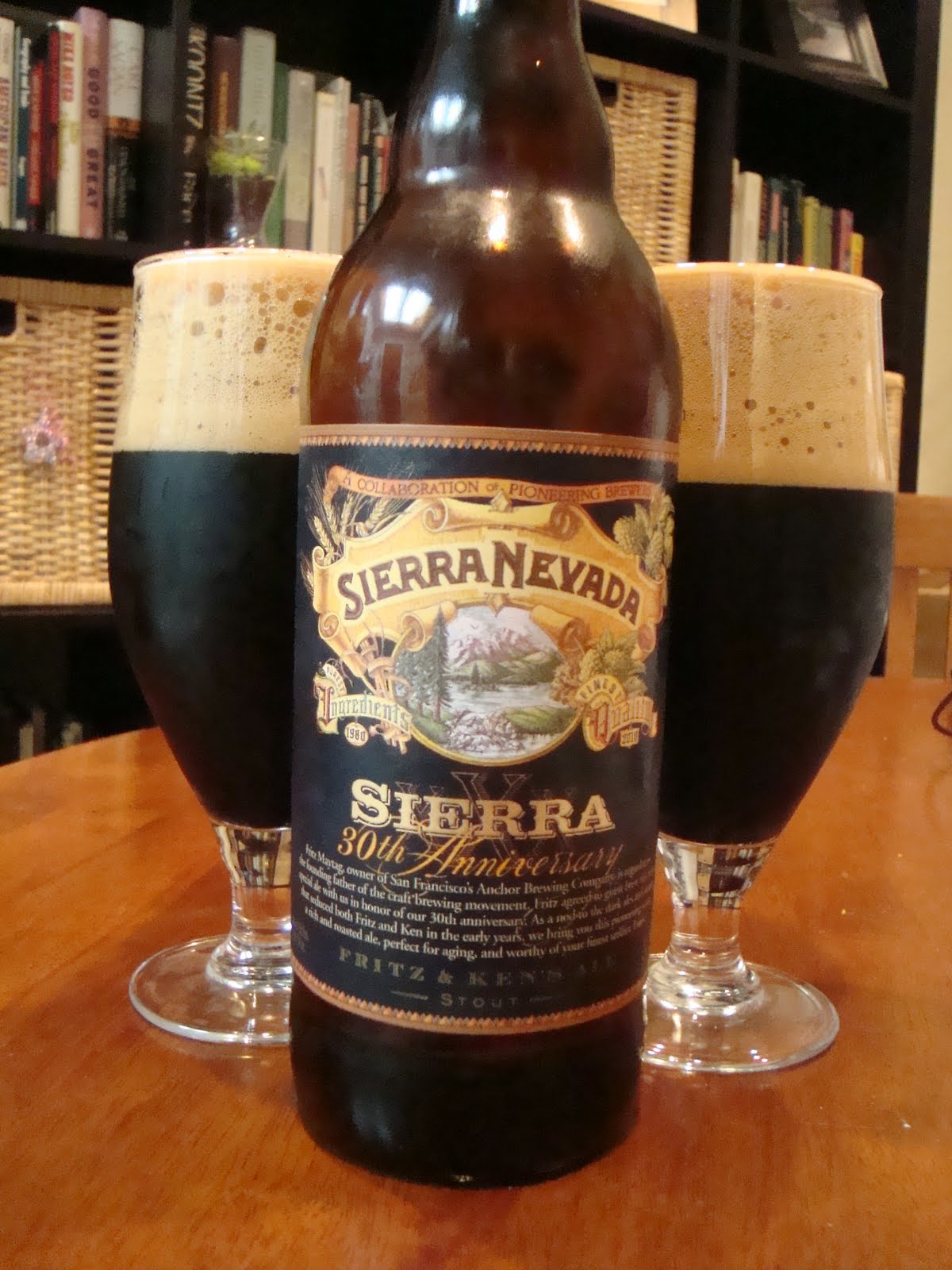
Once Eric and I racked and bottled our share of our efforts, we split a bottle of Sierra Nevada and Anchor Brewing collaborative Imperial Stout . I couldn't help wondering what happened as this beer was created. It's hard to image Ken Grossman and Fritz Maytag arguing in front of the brew kettle, but it's a little hard to believe two passionate, independent, and strong willed individuals didn't have a few differences to work out when they brewed this. It's a great, creamy complex Imperial Stout with a strong bitter chocolate character with a little smokey and nutty undertones. Was this a result of Grossman's and Maytag's combined brewing vision, or simply a product of compromises?

At that point, Eric and I really didn't care about that. We just enjoyed their final result.

Tuesday, April 6, 2010

Race Tapering and Fermentation: Get Out of the Way

All the planning, hard work, and execution is over. While some things worked out better than expected, some other things didn't. There's nothing left to do but let nature take it's course. I could be talking about tapering for The Santa Cruz Half-Marathon this weekend. Or, I could be talking about the collaborative Biscuits and Honey Amber Ale I brewed up with a friend.

Everything in my limited home brewing experience tells me once the yeast is pitched, best get out of the yeasts' way and let them do their thing. Maybe some subtle additions can be made, but the yeasts are really calling the shots, and as long as you take good care of them, they will reward you.

Tapering in the final days before a half-marathon, the only thing to do now in is allow the muscles heal and get stronger from weeks of training, so the mind has the most strength to call upon on race day. Of course, there is the temptation to get in one last big workout to take things to a higher level a few days before race day. Too often, this backfires into a tired performance on the big day. Trust me, I know.

Successful racing and brewing is a lot about getting out of the way of nature, so it will take the best course.

Tuesday, March 23, 2010

Learning Patience in Running and Home Brewing

I'm not a patient man.

This has unfortunately worked to my disadvantage in races, where patience is pretty important. Everyone knows it's important to pace themselves, to not go out too fast. And of course, once the gun goes off, there's all the usual chaos at the start, then the adrenaline starts flowing, patience goes out the window, and before you know it, you're at the first mile 20 seconds sooner than you wanted to be, and in big trouble. At least that's the way a lot of my races started out.

One of the ways I learned to developed a better sense of running patience was through tempo runs. These are workouts of about 20 minutes duration, typically run at a "comfortably hard" pace. A simple rule of thumb is to simply add about 15 seconds to your 10 k race pace. This is around the lactic acid threshold, where lactic acid starts accumulating in the muscles because of chemical reactions required to generate enough energy to maintain this comfortably hard pace. Too much lactic acid in the legs makes them feel rubbery, makes harder to keep up the pace, and is often what forces you to slow down if you've gone out too fast.

A track is a good place for a tempo run, because you want to concentrate knocking out the same pace over that 20 minutes. Of course, you could go faster, but a goal of a tempo run is to training the mind to learn pace sense and develop a certain patience to keep knocking out the same time, lap after lap around the track. (If you can't find a track, a reasonably flat running trail with few variations or interruptions due to traffic works pretty well.) Since lactic acid is accumulating in your legs, the body learns to buffer this acid, and so over time, you can run faster without producing as much lactic acid in the legs.

Learning to be more patient in home brewing? Home brewing workouts seem to be an oxymoron. Instead, patience in home brewing seems to simply come from experience. I'm finding I'm way to eager to bottle and drink my finished brews, where an extra week or two in the carboy or bottle conditioning would give it that extra edge. I recently brewed a coffee porter, and while I originally wrote in my blog post that it was flat, found giving it another week in the bottle allowed the carbonation to fully develop. Probably another week of secondary fermentation would give the yeast a little more time to do their thing and give the flavor a little something extra, but I still think it turned out to be a pretty good brew once I gave it time. I suppose the more I brew, the necessary patience will start to develop.

I need to be a more patient man.

Wednesday, March 10, 2010

Brewing up a batch of Verona's Coffee Porter

My daughter Verona was not named after the classic Italian city of Romeo and Juliet fame, but a small road in San Jose. Her mom and I were struggling to come up with a name after my mother-in-law at the time shot down the first two we decided on. Driving around aimlessly one weekend in San Jose, CA, we found ourselves on Verona Drive and figured that would be a pretty and unique name for our daughter to be. It's one of the few things my ex-wife and I agreed on.

My seven year old daughter is smart, pretty, makes new friends in seconds flat, and handled the turmoil and challenges of experiencing a divorce and having a autistic brother with the understanding and maturity decades beyond her years. I'm very proud of her.

So whenever buying coffee, I pick up a pack of Starbuck's Verona Coffee blend. And deciding to get a little experimental with my fourth home brew, a coffee porter seemed a good direction to go. It only seemed natural to name the brew Verona's Coffee Porter and use Starbuck's Verona Coffee to add an extra dimension to the roasted malt character of a porter, one of my favorite beer styles.

For the recipe, I took the London Porter recipe from page 151 of The Brewmasters Bible by Stephen Snyder, and used a technique outlined in Randy Mosher's wonderful book Radical Brewing to add cold filtered coffee to the brew. Both books have become great additions to my culinary library.

Verona's Coffee Porter
5 gallons distilled water
5 lbs. Dry Amber Malt Extract
1 lb. 60L Crystal Malt
4 ounces Maltodextrin
4 ounces Black Malt
4 ounces Chocolate Malt
2 ounces Willamette Hops (bittering, added 60 minutes to the boil)
1 ounce Kent Golding Hops (finishing, added 1 to the boil for one minute)

One test tube sized vial of White Labs Dry English Ale Yeast WLP007

Original gravity: 1.044

Ferment in the primary for two weeks at approximately 68 degree Fahrenheit.

Transfer to a secondary fermenter, and add 1/2 liter of cold filtered coffee, produced by grinding 4 ounces of Starbuck's Verona blend, adding 1/2 liter of water, and letting sit covered in the refrigerator for 24 hours. Bottle after one week.

Final gravity: 1.018

For those keeping score at home, the original and final gravities correspond to a 3.4% abv brew, rather low for a porter. In my first three home brews, it was clear from my original gravity readings I wasn't extracting enough malt from the grain, and solved this problem by simply using larger steeping bags for the grains, allowing more water flow through the mash. That problem solved, I encountered another one. Not enough yeast. Hardly any fermentation occurred in the secondary fermentation judging by the activity of the carboy airlock, and the final brew's carbonation was rather flat. The original gravity was a tad low, as the recipe gave an estimated original gravity of 1.046-1.048. But the fact that the final gravity of this recipe is expected to be 1.012-1.014 and this brew ended up at 1.018 strongly suggests incomplete fermentation.

Of course, the classic English porter is a little flat, but have to concede the extreme the flatness of this brew is a stylistic defect. The single vial of Dry English Ale yeast I used seemed a little clumpy, so maybe it was old or didn't get incorporated into the wort very well. Whatever the reason, I'm going to use at least one extra vial for my next brew.

As for the flavor, the coffee blended really well with the roasted malts, not overpowering them, and everything seems in the right balance. It also seems I've eliminated the harsh grainy undertones noticeable in my previous brewing. I'd rather brew great beers than learning experiences, but then home brewing is a lot like running a race. There's a lot of satisfaction from taking on the challenge, and you learn from the successes and failures in both the preparation and the final result, and build from it. So I'm eager to give it another go with my next home brew.

Sunday, September 27, 2009

Brewing up a batch of Blind Ambition Amber Ale

It's said that when you get to hell, they play a video of your first date over and over for all eternity. If I don't make it to the pearly gates, maybe the Devil will instead play a video my first homebrew.

Despite my bet efforts to plan ahead and make things predictable as possible, there were plenty of chaotic moments, and I did things that would likely make a good brewer cringe.Part of this was due to Didi, the lovable but slightly brain damaged cat who generally got in my way in the kitchen.
I chose to make a pretty straightforward Amber Ale from a single kit I bought at MoreBeer! in nearby Los Altos. With basically little idea of what I was doing, but have plans to keep homebrewing, I decided to call it Blind Ambition Amber Ale.

The Recipe
The recipe below is straight from the More Beer! kit.

8 lbs. Ultralight Malt Extract
1 lb Crystal 60L Steeping Grain
1 once Galena Hops, Bittering Hops boiled for 60 minutes
1 once Willamette Hops, Flavoring Hops boiled in the last 5 minutes
1 once Willamette Hops, Aroma Hops added for the last minute
5 gallons distilled water
Yeast strain: California Ale Yeast? (from memory, didn't actually write down the strain)

Original gravity: ???? (Not measured, recipe estimates it should be 1.060)
Final gravity: 1.008

Brewing Notes
OK, I didn't get the original gravity because once the wort was in the carboy, I was reluctant extract some of the wort back out of the carboy, potentially introducing a source of contamination. The crystal malt was steeped at about 120-150 Fahrenheit, which may have been a little low. Did a partial boil of about 3 gallons of wort, cooled it in my bath tub to something that seemed like room temperature, and then poured it into the carboy. To that, I added the remaining 2 gallons of water which was chilled in the fridge. After about 1 1/2 days, active fermentation was observed. The wort fermented for 15 days, then 2 cups of water with 4 ounces of corn sugar dissolved into it was added to prior to bottling the final product.

I kicked up a lot of the yeast from the bottom of the carboy lifting it up from the floor into the kitchen sink to siphon the beer into the bottle filling bucket. With about 4 out of the 5 gallons of beer siphoned out, I started noticing large particulates in the siphoning hose, and with that, abruptly stopped filling any more bottles.

Tasting Notes
As you can see from the picture above, a pretty solid white head floating above the hazy light brown brew. I really liked the spicy, aromatic character imparted by the Galena and Willamette hops. The malt was there, but was a little thin, as would might expect with the low final gravity. However, there was a noticeable grainy character to the beer. I also noticed that a few of the bottles had a noticeable harshness, which seemed like an alcohol presence to them, which is really an off-flavor for the style. Differing levels of carbonation in the bottles suggest I need to mix in the priming sugar more evenly next time.

My final, highly biased, verdict. Not a bad beer. It's maybe as good or better than 10-15% of the craft beers I've tried, whhich includes a few clunkers from craft breweries where something went horribly wrong. But Blind Ambition Amber Ale is certainly not a good beer. But I enjoy drinking it, and quite frankly, the only person I really have to satisfy is me so on that score, it is a modest success.

If you're wandering on by and read this, and have any thoughts or advice, don't hesitate to let me know. I would love to get any advice from any real home brewers out there.

Thursday, September 3, 2009

The Session #31: Summer Beers

This month's Session, Summer Beers is hosted by Peter Estaniel over at the BetterBeerBlog.

This month's Session, Summer Beers, is a great topic, since I have little interest in jumping on another bandwagon of beer geeks raving about the latest hyper-malty, barrel aged, hop bomb where the brewer actually did throw in the kitchen sink. The lighter beer styles we normally associate with summer require much skill and talent to brew, with no places to hide off flavors. Having had so many great summer beers, it's hard to pick a favorite. For me, a "favorite beer" is largely determined in the context of which it is consumed, as well as how and where the beer is produced. That's why my favorite beer this summer is from a brewer you never heard of, and I haven't even swallowed a drop of it yet. I'll get to my favorite summer beer at the end of this post, so allow me to celebrate a number of my summer favorites before then.

Favorite Summer Beer with Lime In It
Summer beers with lime in them are typically some hideous product from big industrial breweries that are barely recognizable as beer. That wasn't the case with Coronado Brewing's Lime Wit that I enjoyed this summer at my favorite beer bar in San Diego, Downtown Johnny Brown's. Sour lime dominates the slight yeasty flavors of this Wit beer, and there's a bitter lime peel finish to it. I've enjoyed other wits more than this one, but this unique San Diego-inspired beer deserves a mention.

Favorite Summer Beer to Drink After a Summer Run
It's only natural to expect the writer of blog called Bay Area Beer Runner to cite a favorite summer beer for drinking after a run. The problem is that during summer, my runs are exclusively in the early morning when the air is coolest, which is when many runners train. Knocking down a couple pints of beer after a morning run before heading off to work is a pretty risky career strategy. Not being a fan of those foul-tasting, over priced sports drinks, I just have water after a run.

Favorite Summer Beer to Witness Another Disappointing Chicago Cubs Baseball Season
I've been a Cub fan for thirty years, and each year, the Cubs find a new and creative way to build up expectations and then deflate them over the course of a baseball season. The other constant over that time is that Heileman's Old Style has been strongly associated with Cubs' baseball. If you've ever had this light lager, you'll begin to understand why Cub fans have such a high tolerance for pain and misery.

Favorite Summer Beer to Get Ready for The Ohio State University's Football Season
Keeping on the topic of sports, as a graduate of The Ohio State University, I've spent many a summer chatting away with other Buckeye fans in anticipation of the upcoming fall football season. And there's no better beer for this than Buckeye Beer from Maumee Bay Brewing in Toledo, OH. It's a beer with a long history that ceased production in 1972, only to be recently revived with a retro-marketing campaign. But it's no weak, gimmicky pilsner. This refreshing beer's malt is a little biscuit-like, and the hops crisp and grassy. It's also good in winter time for Buckeye fans recovering from a crushing Bowl game defeat.

Favorite Summer Beer to Experience a 60's Flashback
Last month, my girlfriend and I checked out Magnolia Pub and Brewery, merely a block away from the storied Haight-Ashbury intersection in San Francisco. We were both really impressed with their Kalifornia Kolsch. It's a hazy yellow brew, with a strong peppery flavor and we also noted some notes of lemon. Despite the strong flavors, there was a feathery lightness to it. It's so good, it actually caused me to admit The Grateful Dead had some redeeming qualities.

Favorite Summer Beer That I Couldn't Come Up with a Category For, But Wanted to Mention Anyway
I've long been a fan of Victory Brewing in Downing, PA, but it's hard to find their beers in the Bay Area. In San Diego last month, I found Victory Brewing's Prima Pils on tap. Like any good pilsner, it’s got a crisp grassy hops finish, but I also picked up some savory herbal character with all that hoppy goodness, giving it a rare complexity and dimension for a pilsner.

Before revealing my Favorite Beer of the Summer, I should start by saying why I think running is a great activity and for those of a competitive nature, a great sport. All you need is a good pair of shoes, lace 'em up, and go out the front door. The equipment is very affordable, and the best places to run are public areas available to all. There are road races held all over the United States where for a reasonable fee, anyone can enter to run with the best runners in the nation, or even the world. The stop watch does not discriminate on the basis of race, income, sex, religion, origin, good looks, or anything else.

The same egalitarian qualities that makes running great, makes beer great. It is most commonly consumed in informal public gatherings. Even the finest beers are affordable to most. And with a small investment, anyone can start brewing beer for themselves. That now includes me, as I've home brewed up my first batch of beer of what I expect to be the first of many home brews. Perhaps someday, my brewing skills will progress to the point where I'll compete in home brewing competitions, but for now, I'll settle for brewing up something that just tastes good.

I didn't muck around in the kitchen that badly brewing it up, so fingers crossed, it will taste OK. Since it was bottled a week ago and needs two weeks of bottle conditioning, I haven't even tasted the final product. But sampling the brew as it went into the bottles didn't reveal any obvious off-flavors, and it tasted like a decent beer to me. Having only the slightest idea of how to brew beer, but with plans to keep at it, I call it Blind Ambition Amber Ale, and it's my favorite summer beer.